Visible
Translating chronic pain into presence
Visible addresses the communication gap that exists in the life of a chronic pain patient. Through conversations with ten individuals and four doctors, I uncovered a dual disconnect; in how patients perceive their own pain, and in how that pain is understood by others. This lack of empathy and understanding often leads to ineffective self-regulation and external support.
Through several rounds of prototyping, I explored how a medium could mediate this dialogue; helping patients make sense of their condition while fostering empathy through communication.
The final iteration invites users to hold their pain accountable through an input device that translates pressure into visual form. The intensity becomes a metaphor for experience, providing biofeedback and enabling silent, ambient sharing with loved ones — supporting both internal reflection and external connection.
✲
Course
Thesis project, 8 weeks
Advisors
Role
User research, physical + digital prototyping, physical computing, 3D modelling, Java
Imagine having the flu forever. Now imagine people expect you to live normally. That’s chronic pain
Estimated 1.5 billion people, or 20% of the world's population, experience chronic pain. This means that approximately one in five people suffer from pain that lasts more than 12 weeks, often without an initial injury.
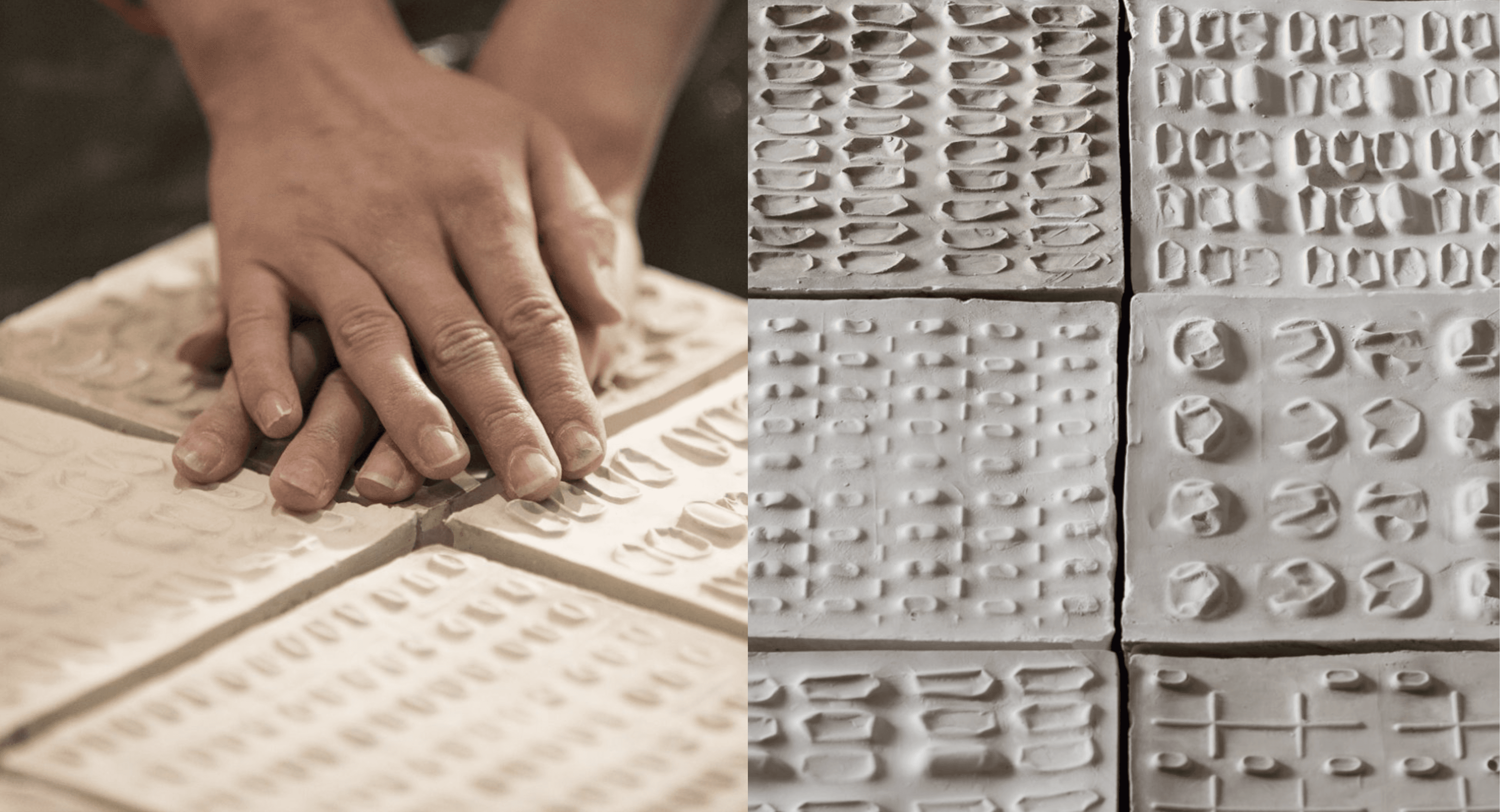
Source for artwork: Picture of health - the women turning chronic illness into empowering art
#Internal dilemma
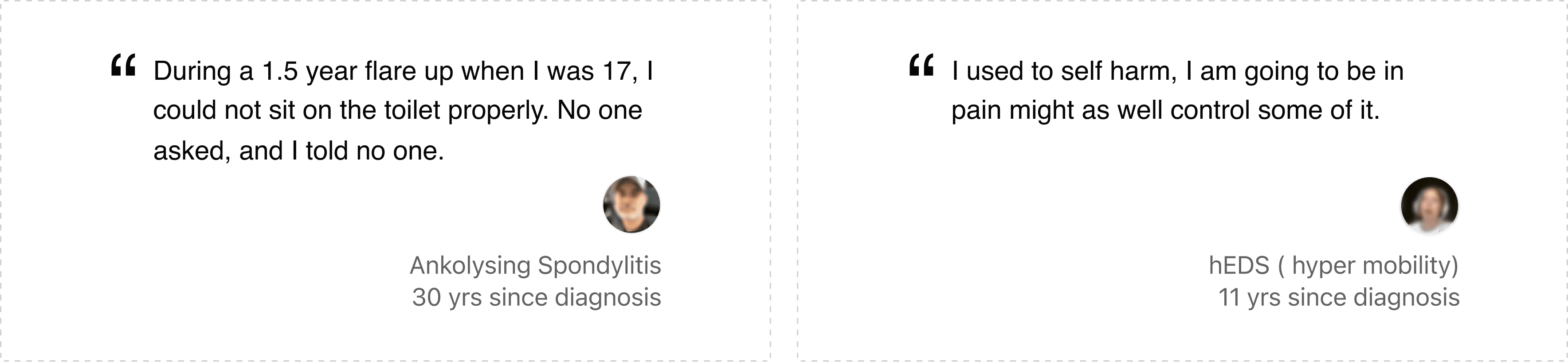
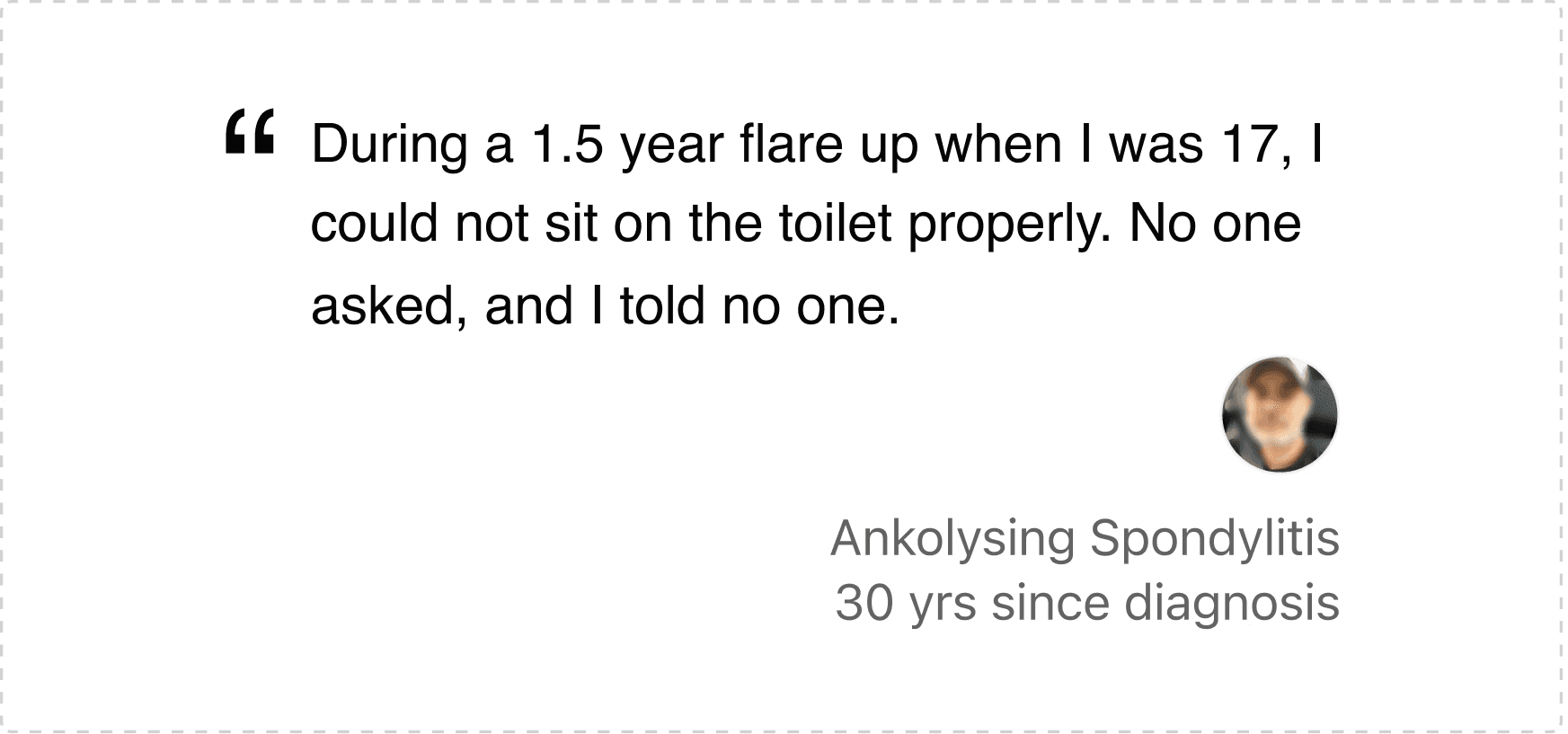
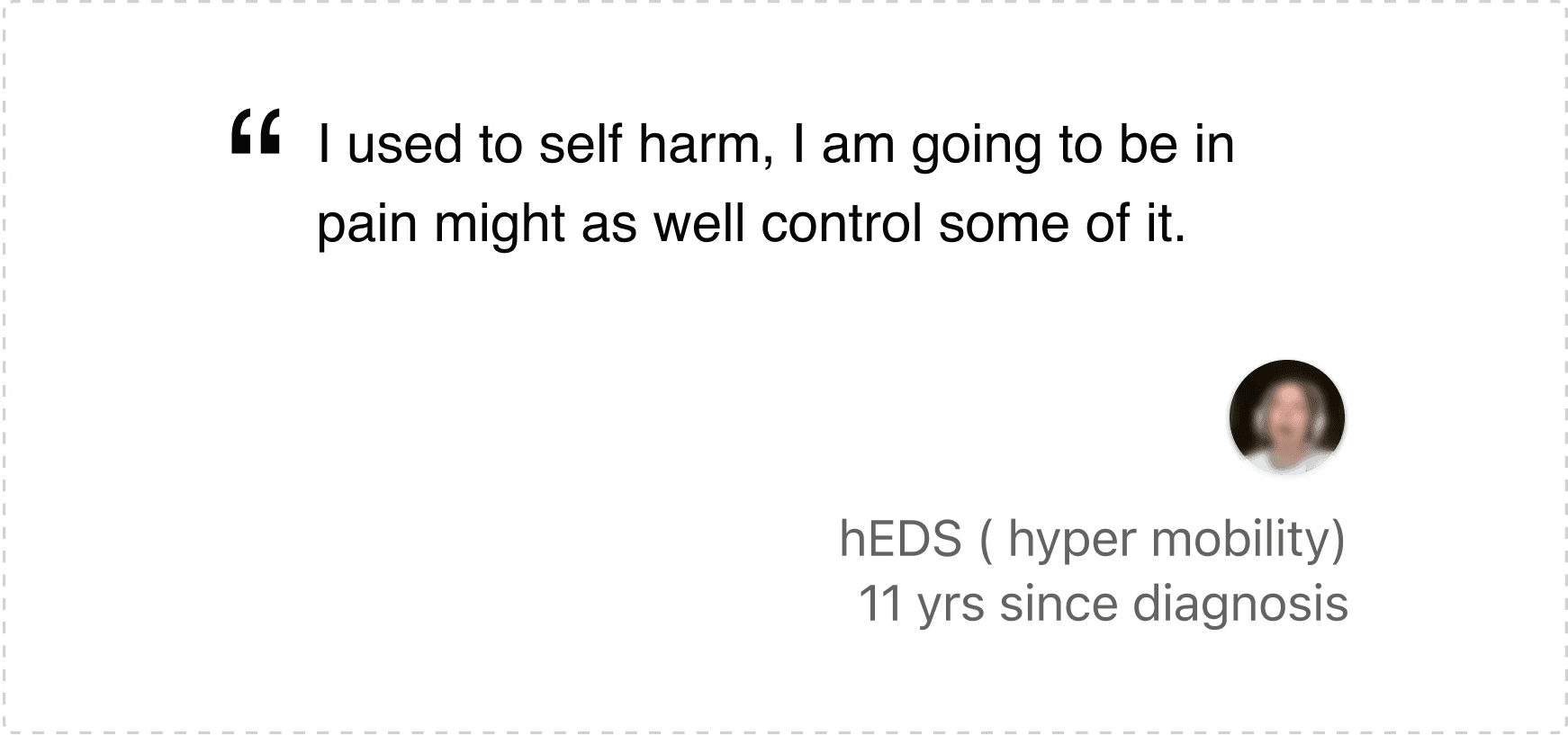
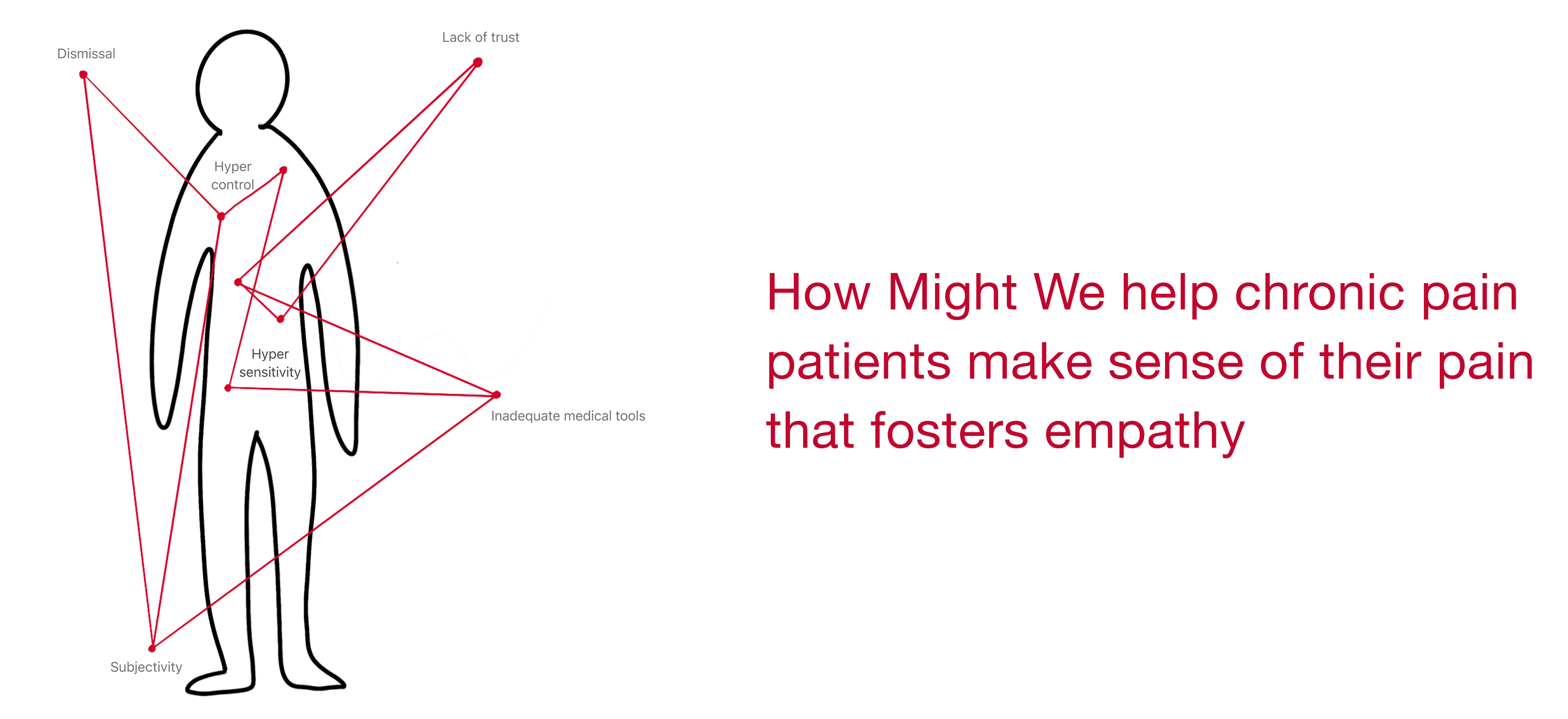
Unpredictability of chronic pain causes avoidance, and the need to appear healthy for the world
It creates an overt need for control, to be perceived as “healthy” because episodes can last days, months, or even years. Its sporadic, patternless and unpredictable nature stays invisible since functioning continues, masking constant discomfort.
#External communication mismatch
Pain is subjective; and too often, it is dismissed and invalidated
Because chronic pain is subjective and invisible, self-reported experiences are often dismissed. Current tools lack the ability to capture the severity. As social beings, our nervous systems rely on being understood; disbelief and dismissal can physiologically affect the brain, as shown by this UCL study
Language creates the reality it describes.
Desmond Tutu
Anti- apartheid activist, Nobel Peace Price winner 1984
Lisa Thompson
Fribromyalgia
8 years since diagnosis
Design challenge
Let's bridge the communication gap within and foster empathy
The challenge became twofold. One was internal; supporting individuals in learning to
reinterpret pain as information, not threat. Help them make sense of their disease to enable self regulation.
The other was external; the need for empathy as a form of regulation, validating both the severity and the lived reality of pain.
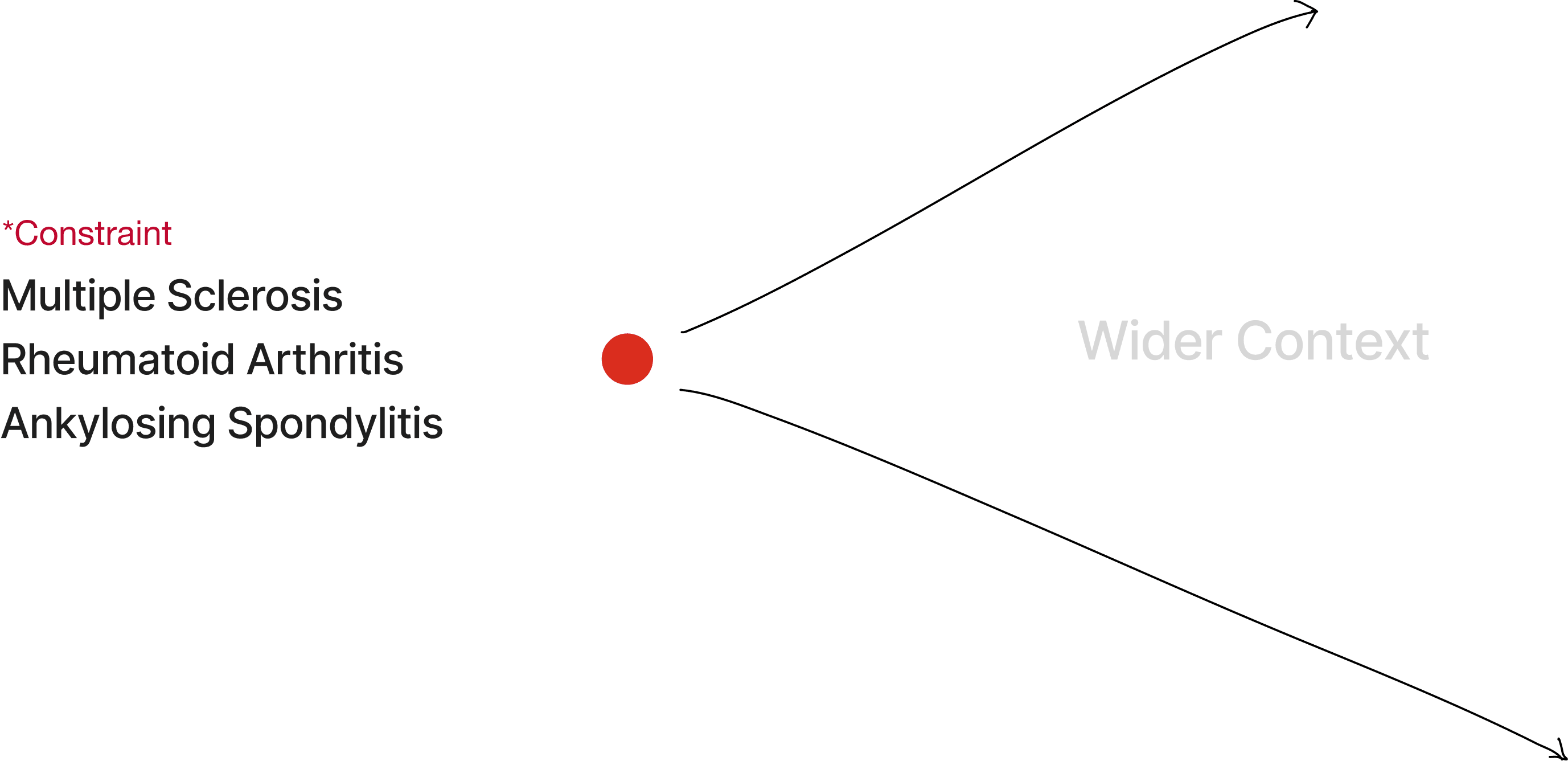
I focused on musculoskeletal pain driven by muscle and tendon tension. Chronic conditions vary widely, so I chose one I know closely as a precise entry point. With a body-proximal input, I went deep into one case first, so it can be assessed how it could extend to other conditions.
User behaviour as the guiding principle
The power of relativity to explain the intangible
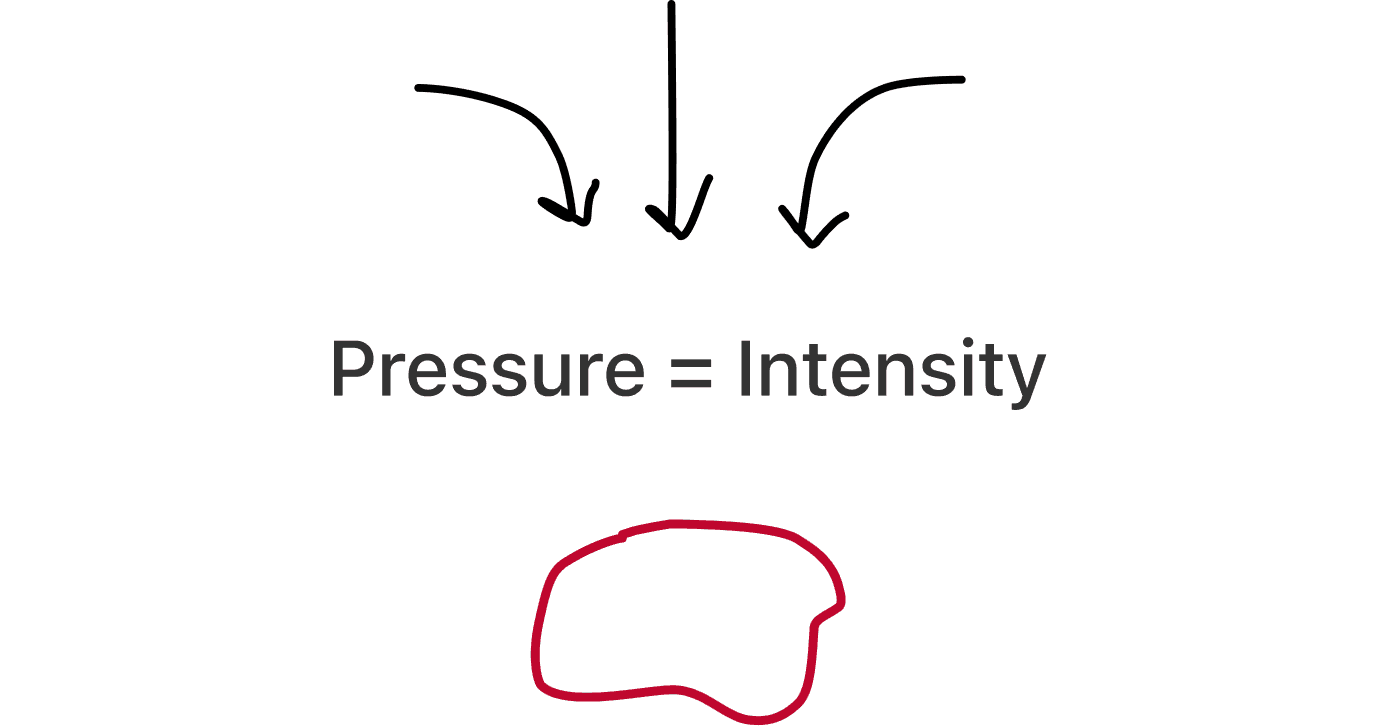
This experiment revealed an opportunity to treat pressure as intensity, which became a guiding principle for the project. In these conditions, how much pressure is applied reflects the nature of the pain. Pressure became a form of communication— directly shaped by one’s relationship with pain.
✦
The concept
Making the invisible; Visible
Visible treats pain as real and present; not fleeting, exaggerated, or imaginary. It gives pain space to be acknowledged and holds it accountable in daily life.
Through touch, the body responds. Applied pressure is captured and returned as vibration, making pain tangible without the need for explanation.
On long flare-up days and quieter moments of persistent discomfort, the Pain Catcher holds vulnerability. It supports those times when explaining oneself is exhausting, allowing pain to be recognised, held, and met on its own terms.
In a nutshell..
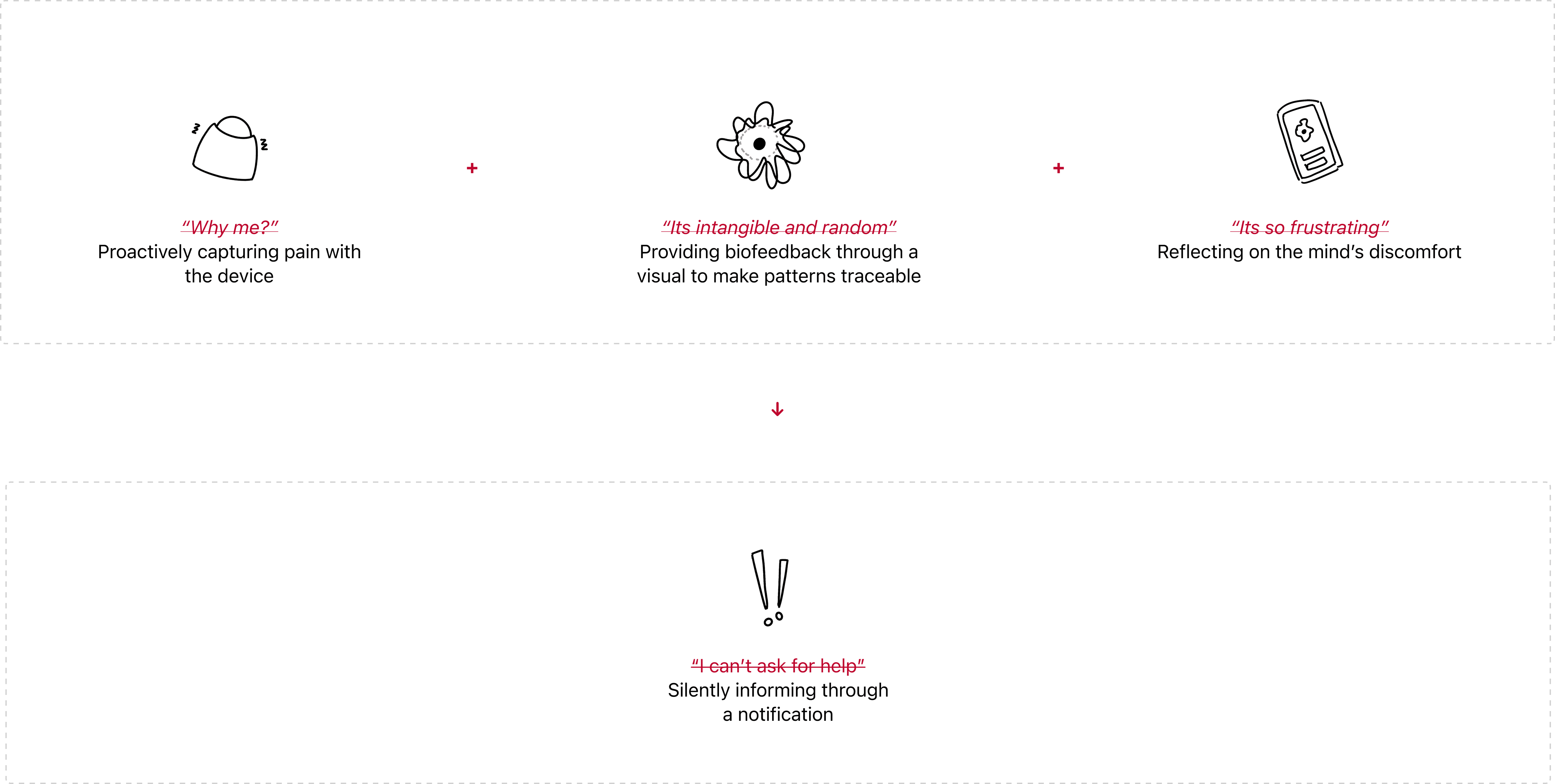
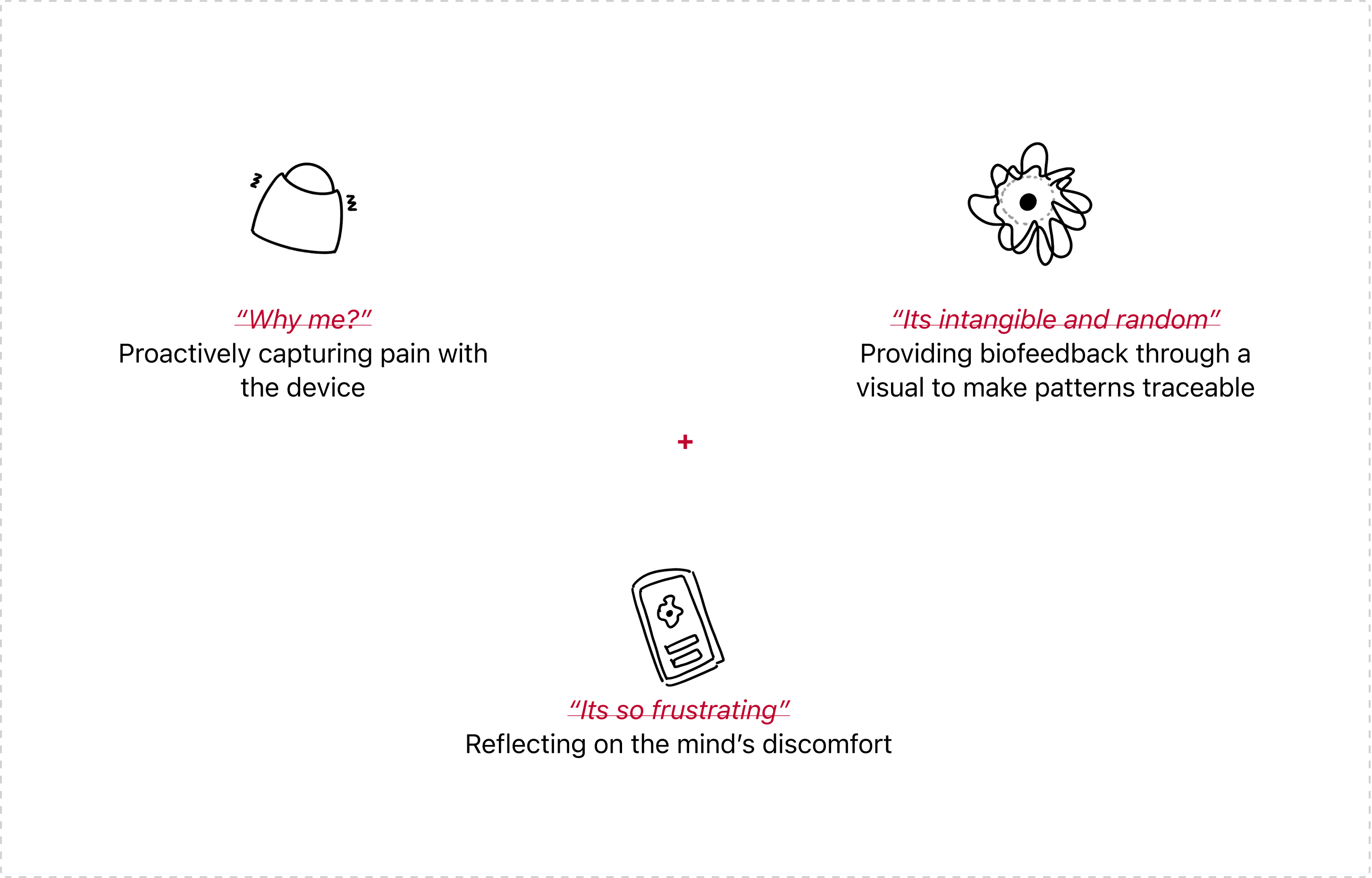

#1 Intensity as a medium: Capturing the body’s discomfort. Pressure as input + vibration as feedback replicating intensity
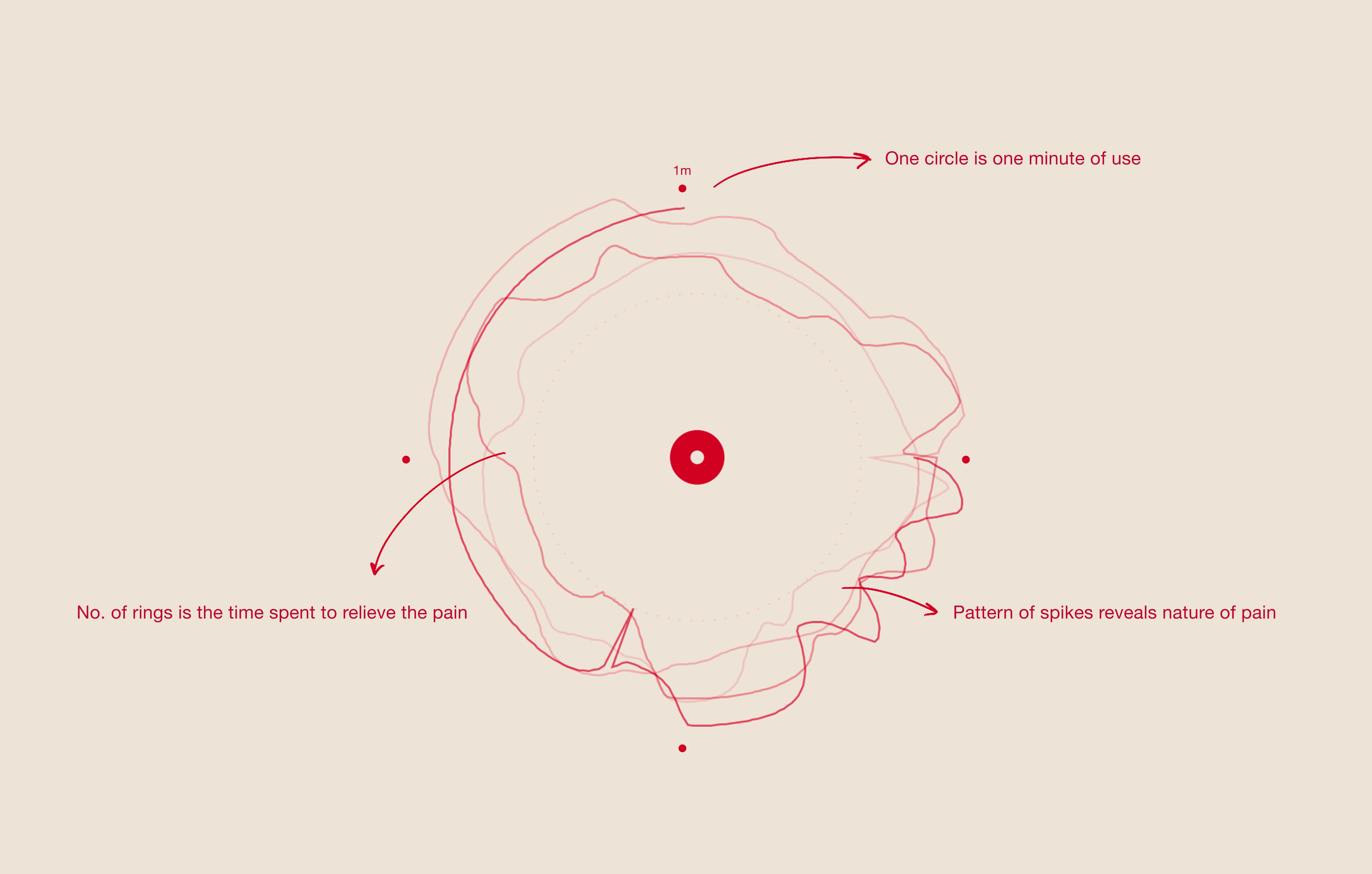
#2 Realtime visualisation of the intensity: as a drawing of the pain
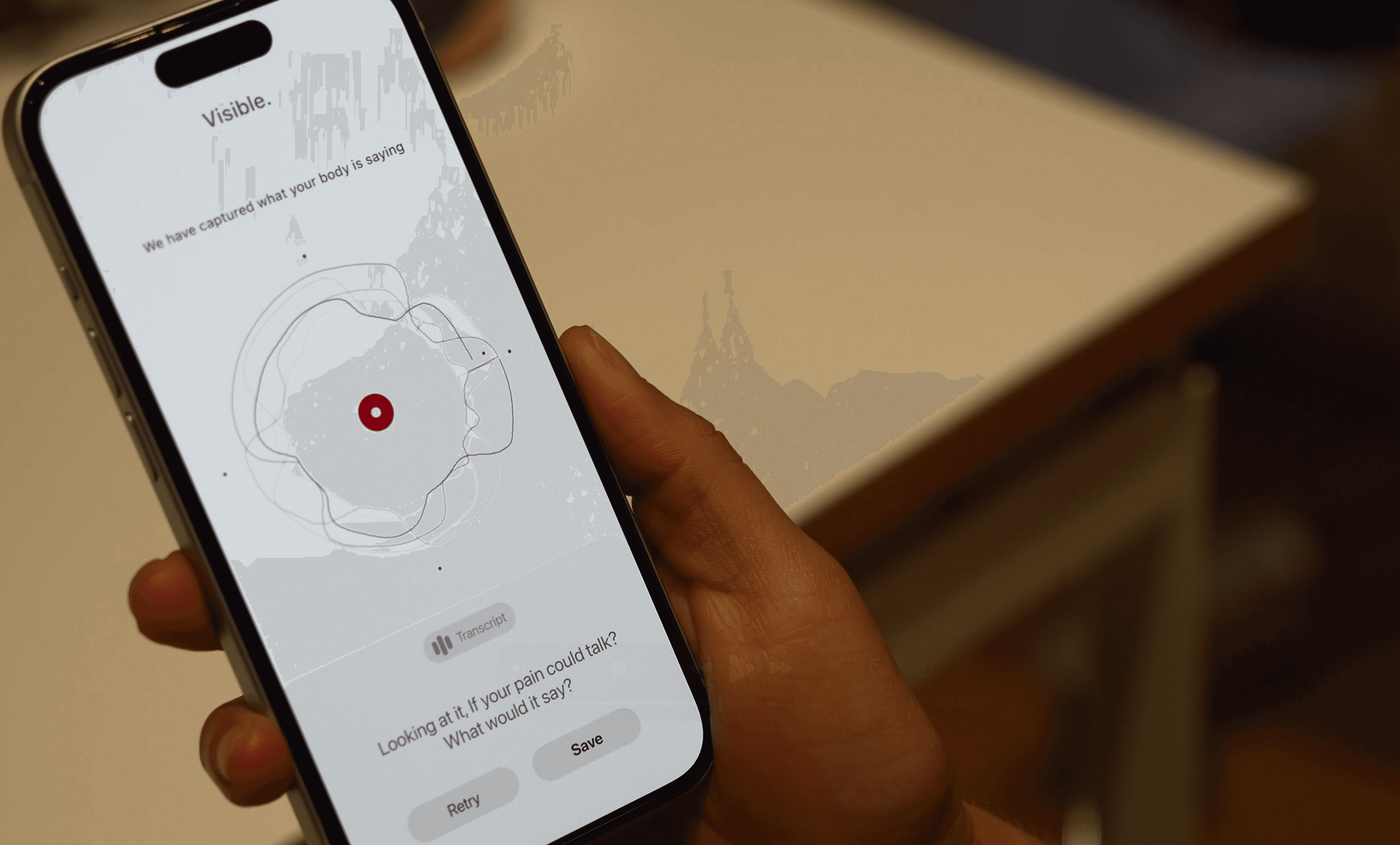
#3 Reflecting & verbalising mind's discomfort: Through an app there is audio recording of frustration with the pain which can be tracked over time
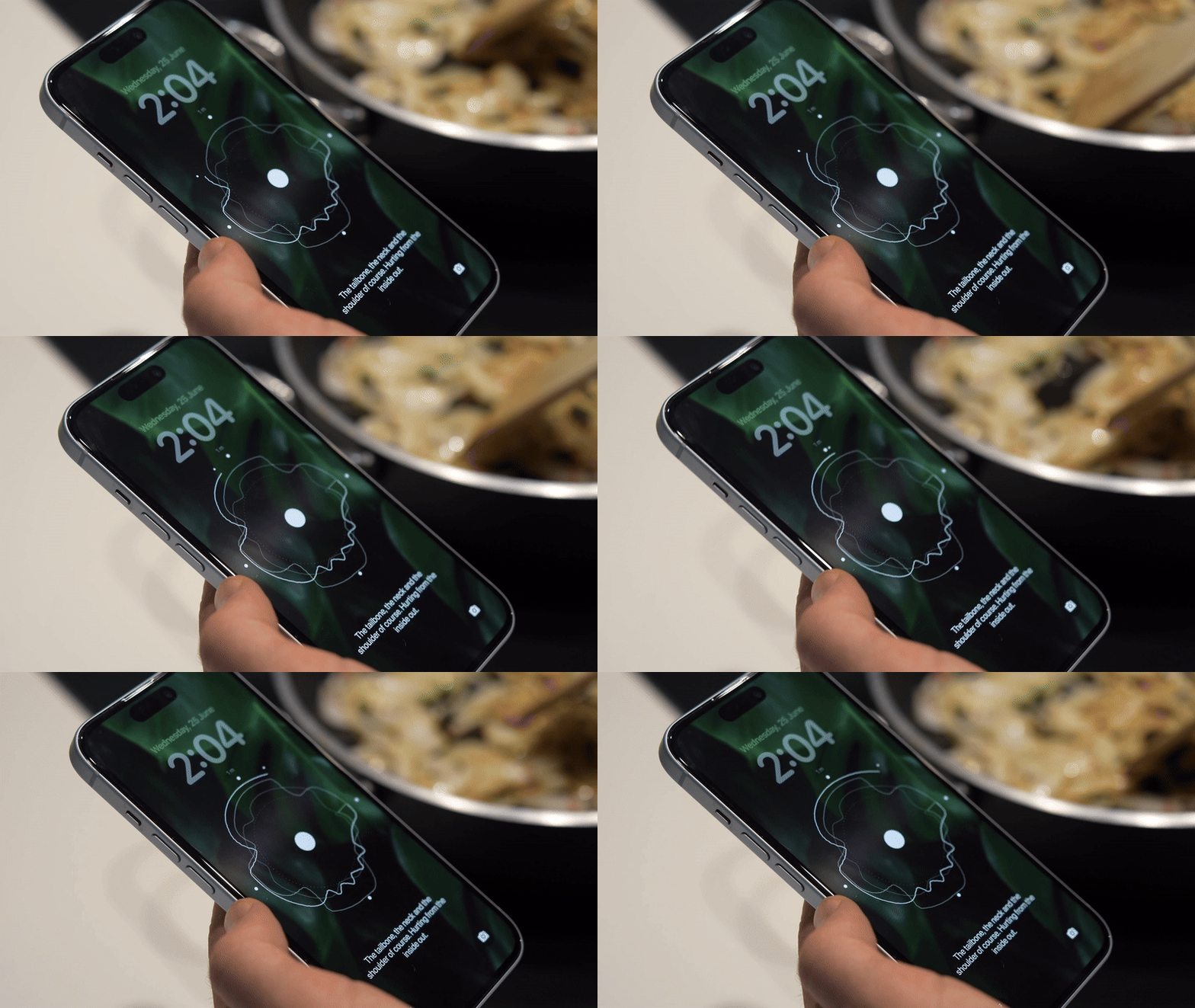
#4 The silent notification: An ambient notification of the moving visual and the prompt response
✦
The Process
How did we get here?
Mapping the journey of a chronic pain patient trying to communicate their pain. What factors are at play. Leading to 3 empathy experiments attempting to prototype what the output of communication would look like to foster empathy.
#1 Empathy experiments for the senses
Experiments stemmed from the rage toward my disease, they lacked connectedness. I needed a shift!
It created empathy but did not reflect long term impact of the disease, lacked chronicity. Also, it failed to connect the chronic pain sufferer to the output, it was one sided.
Led to change in the mental model of creating a simulation of the pain to creating a medium which enables translation of the discomfort.
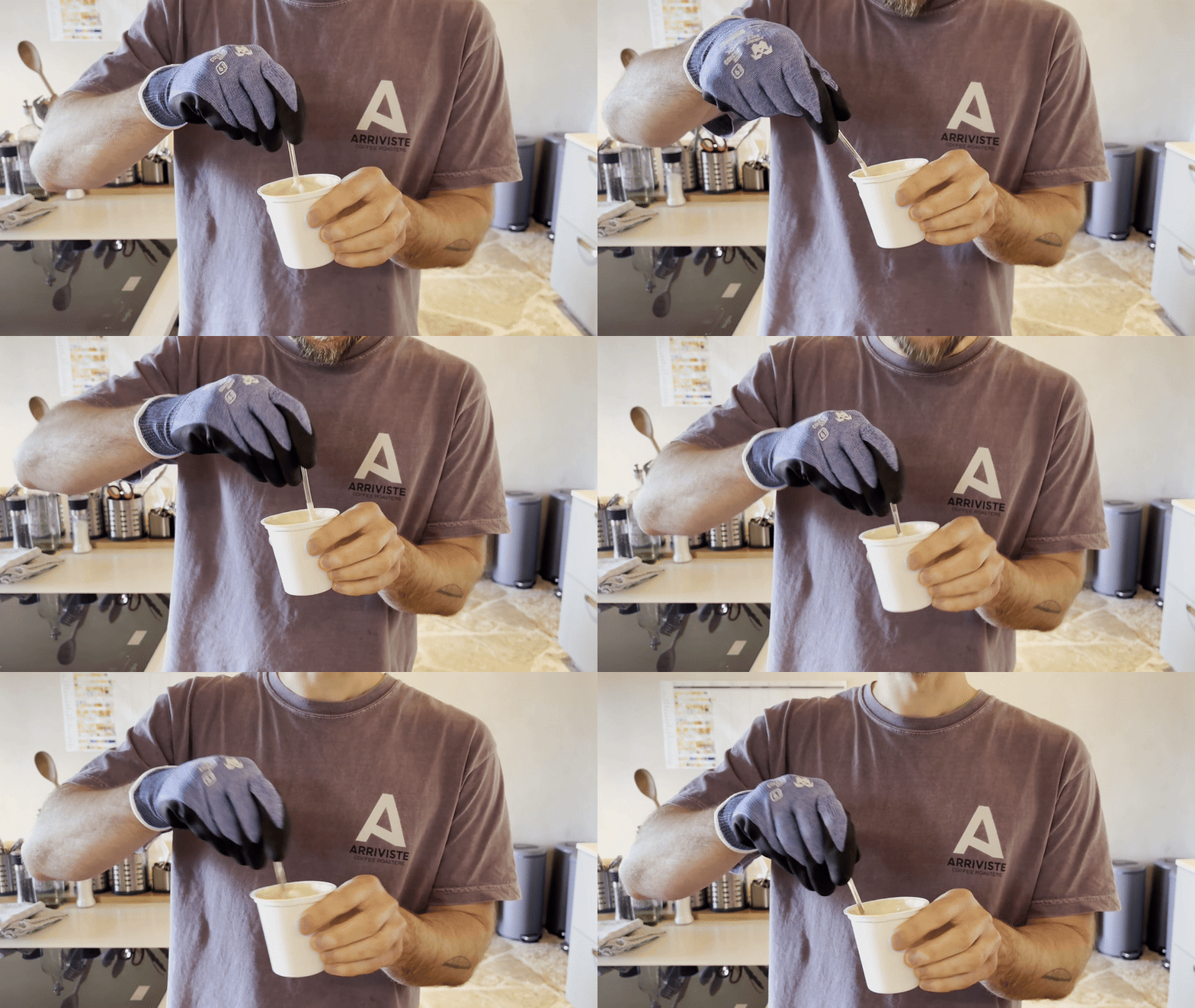
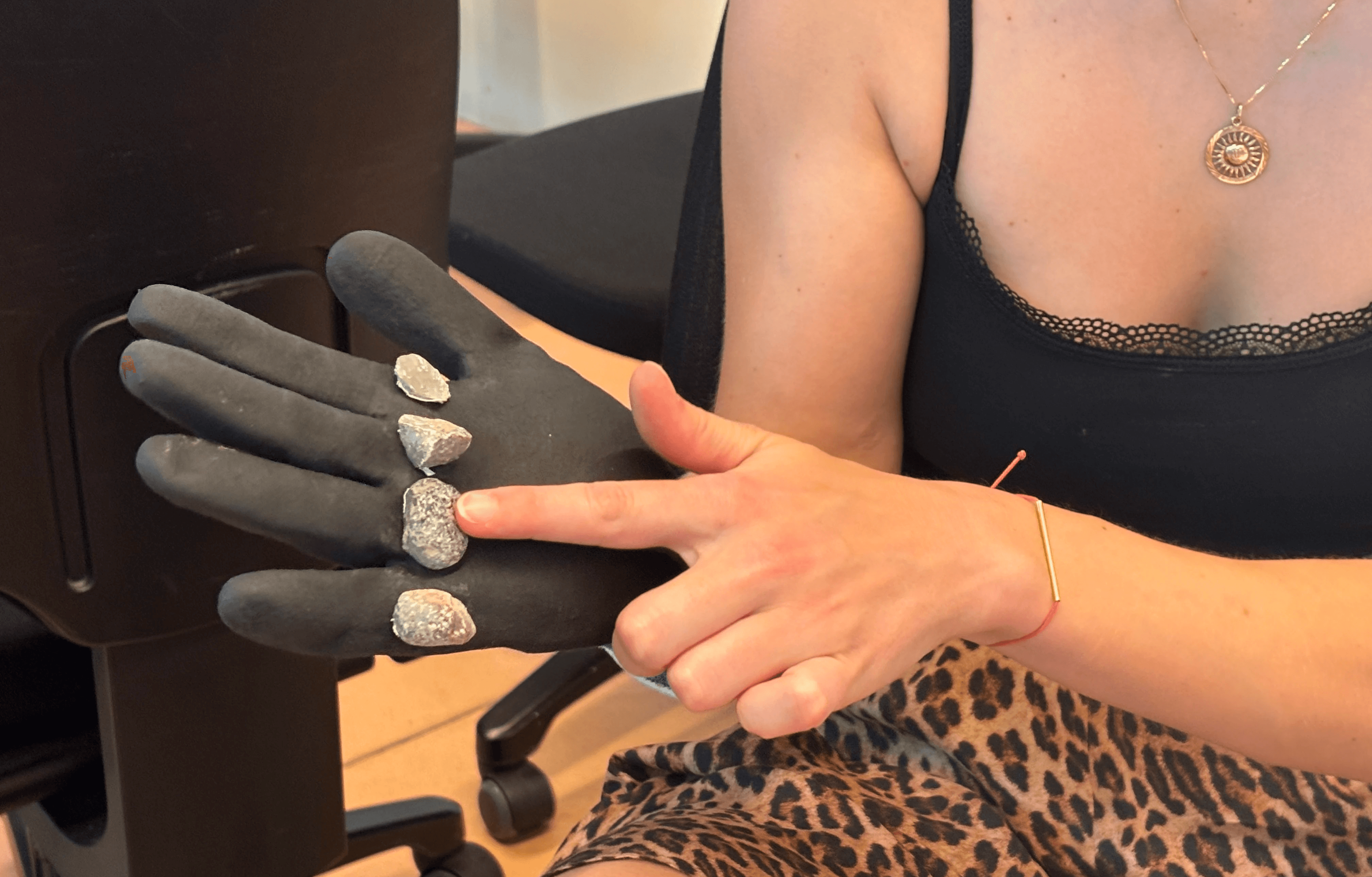
How long can you wear the glove for? Replicating unbreakability from pain
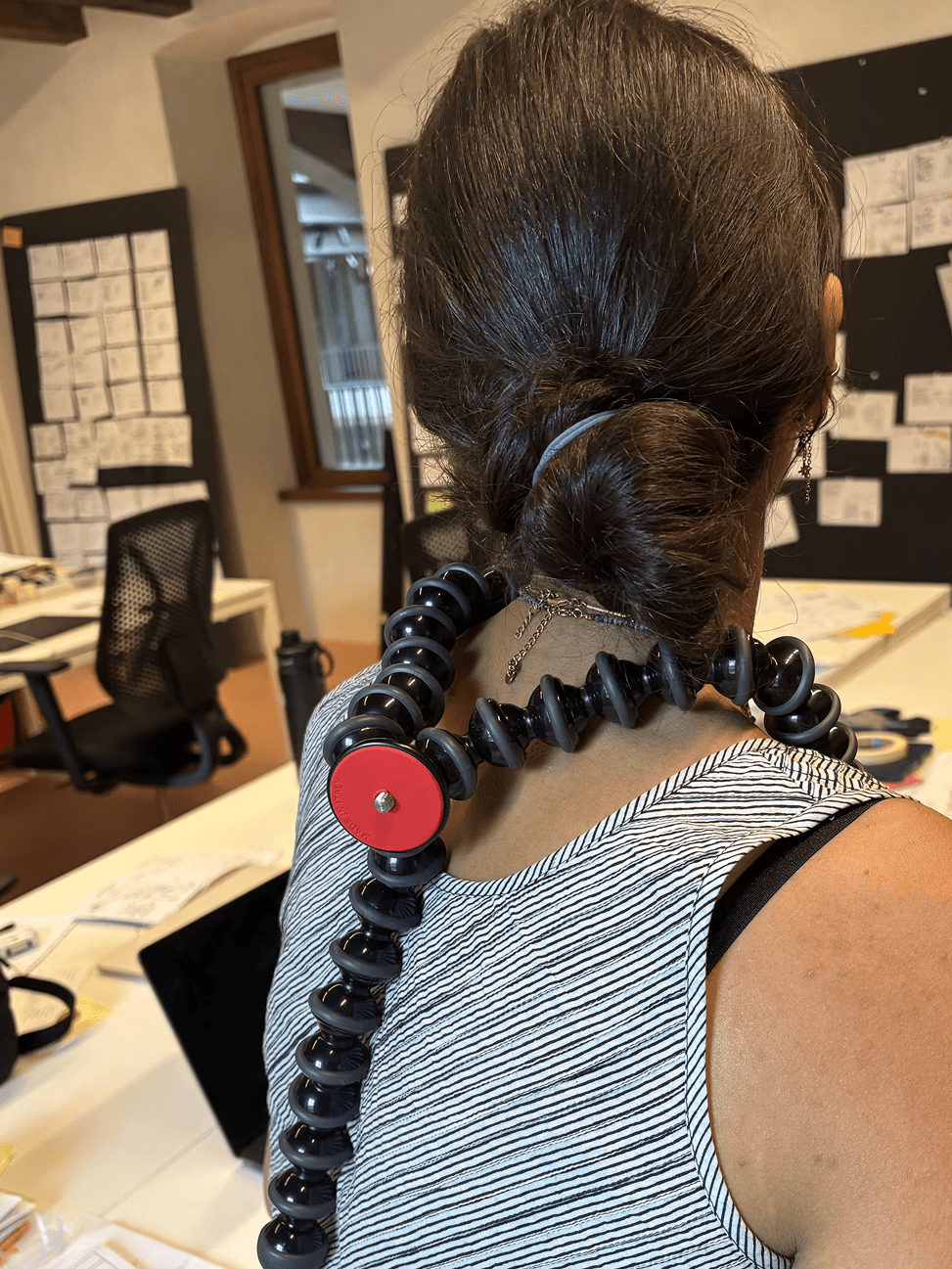
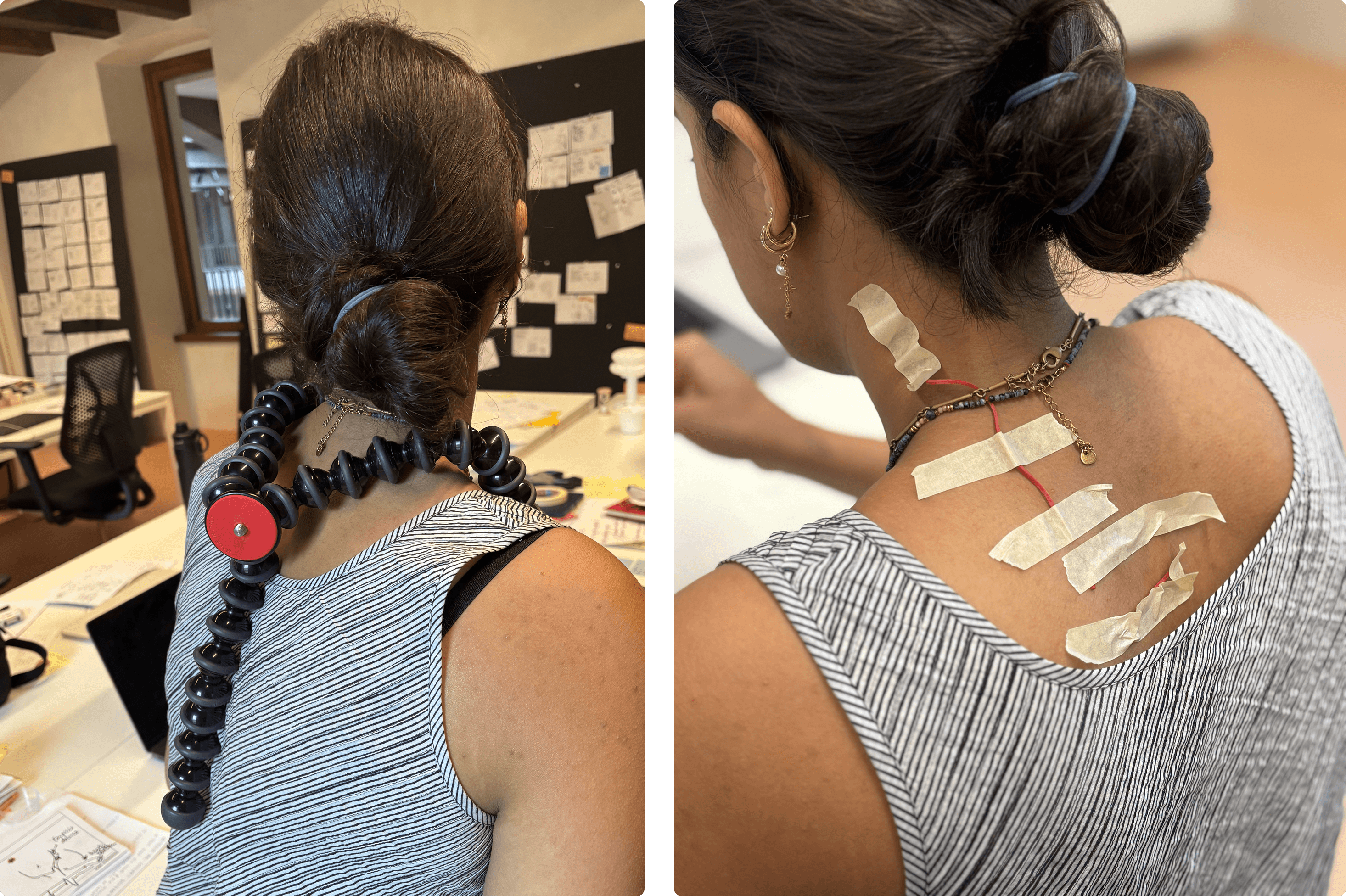
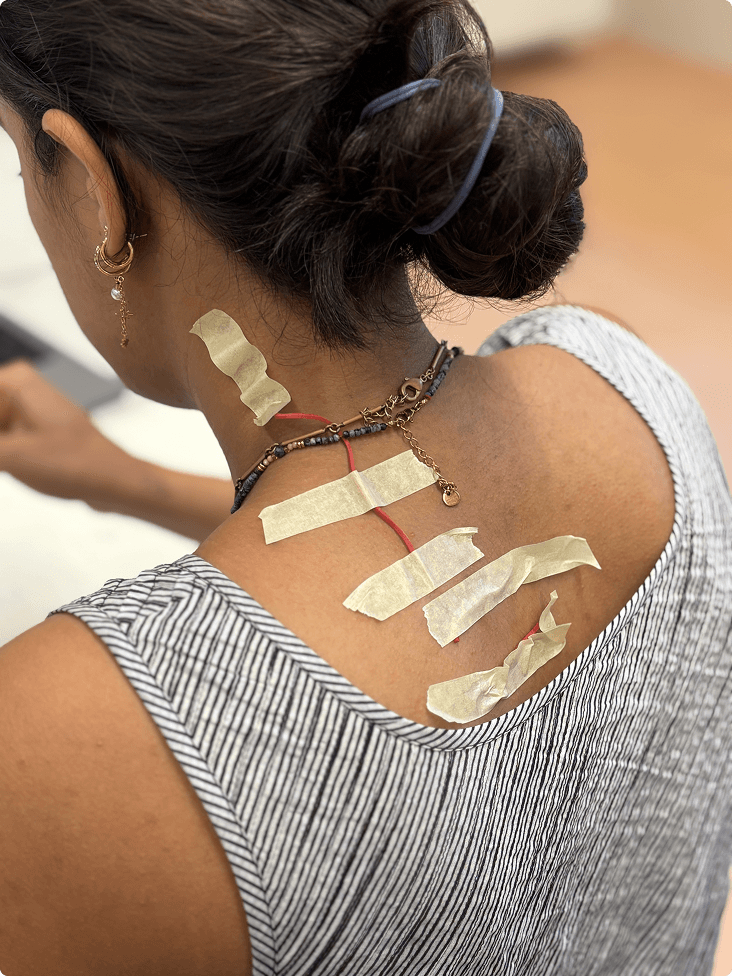
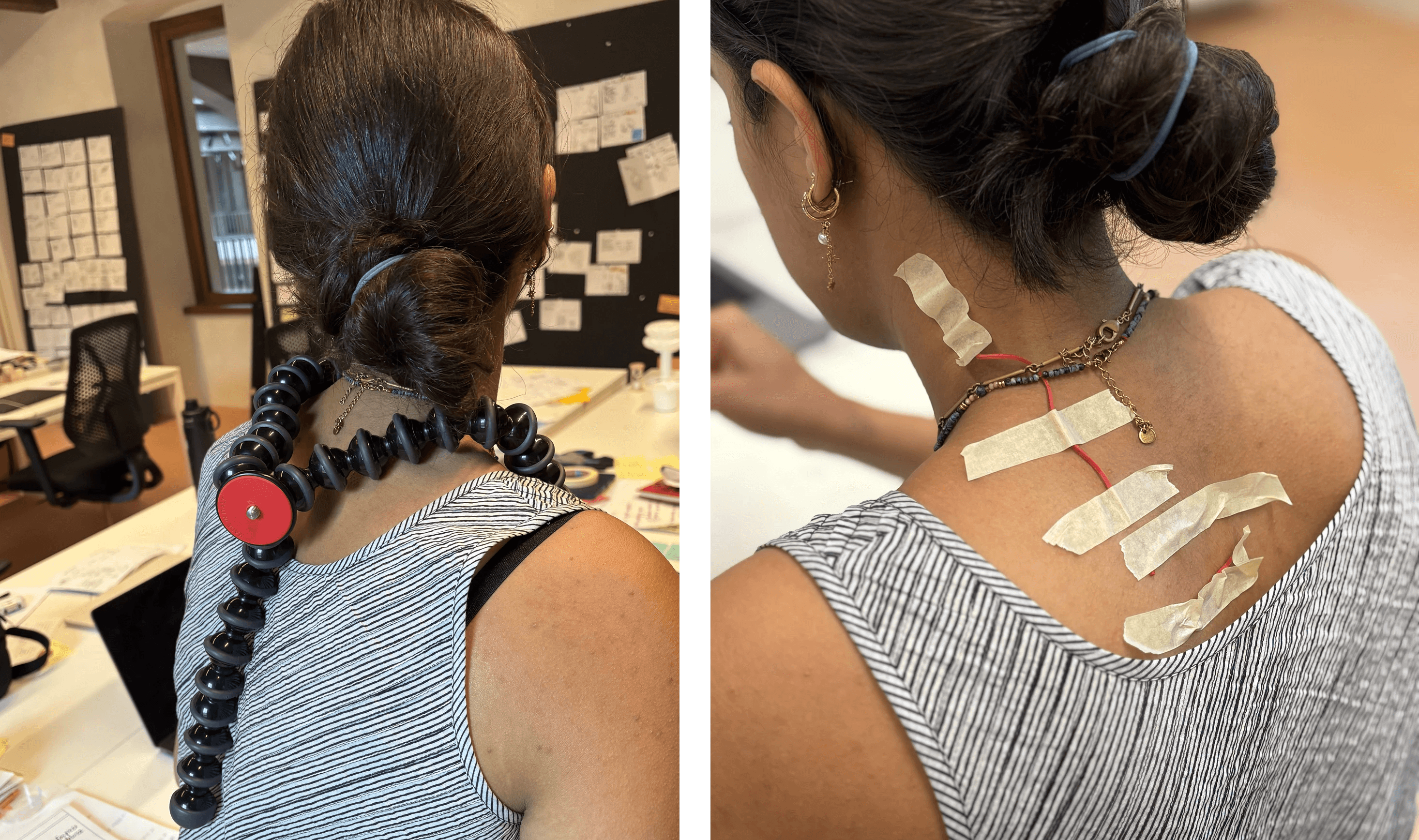
Neck wearables causing disruption
#2 What is a medium
Medium as_
During testing, a quiet but powerful difference emerged. My classmates approached the body scanner gently, dabbing it onto their skin with care.
Chronic pain patients did the opposite. They pressed it hard, jamming it into the places that hurt most.
The object was the same, but the interaction wasn’t. The force of touch became a language. Pressure revealed lived experience and how pain reshapes urgency, control, and the body’s relationship to relief.
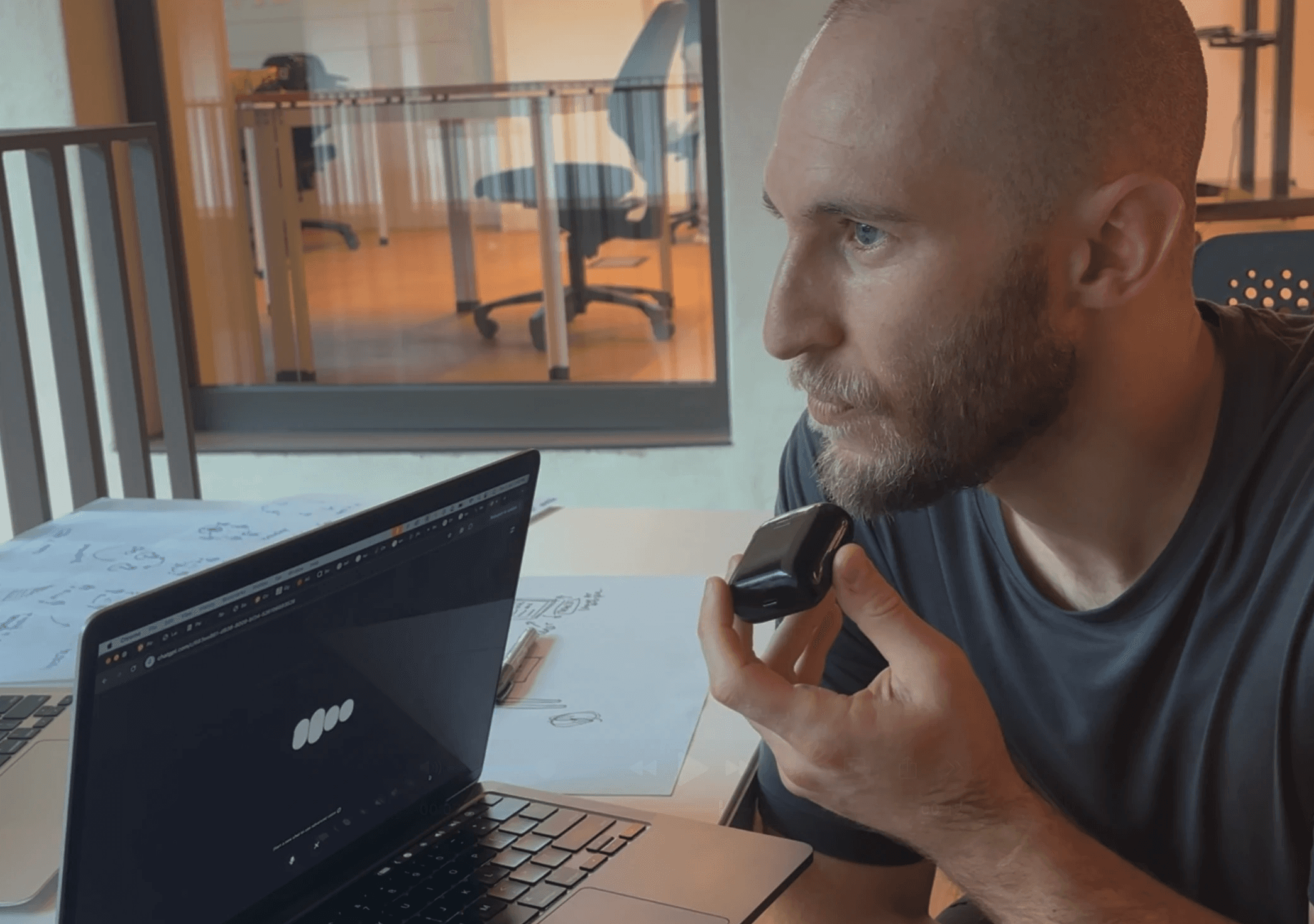
_an AI audio translator

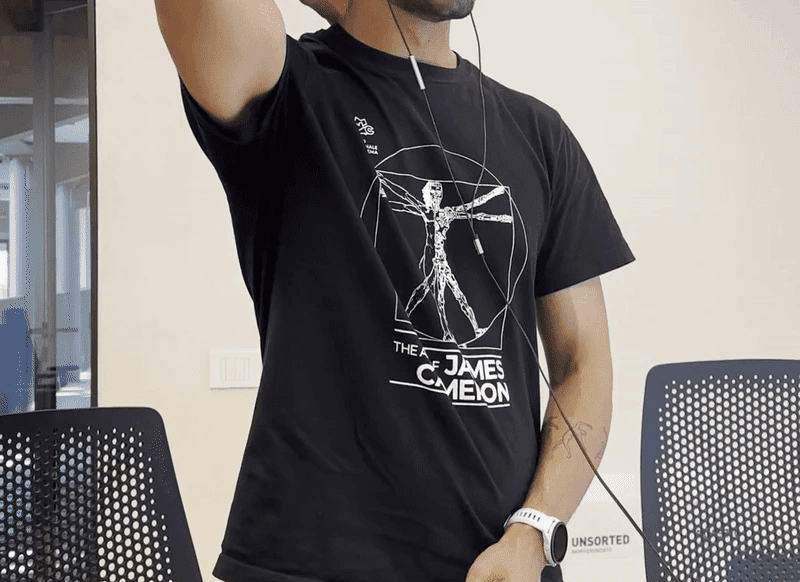
_a body scanner
#3 Prototyping the input
The medium became the conduit to measure the severity and nature of the pain
Form I tried multiple ways to apply pressure on the body through a medium. The most instinctive was→ when it feels part of the hand and affords massaging.
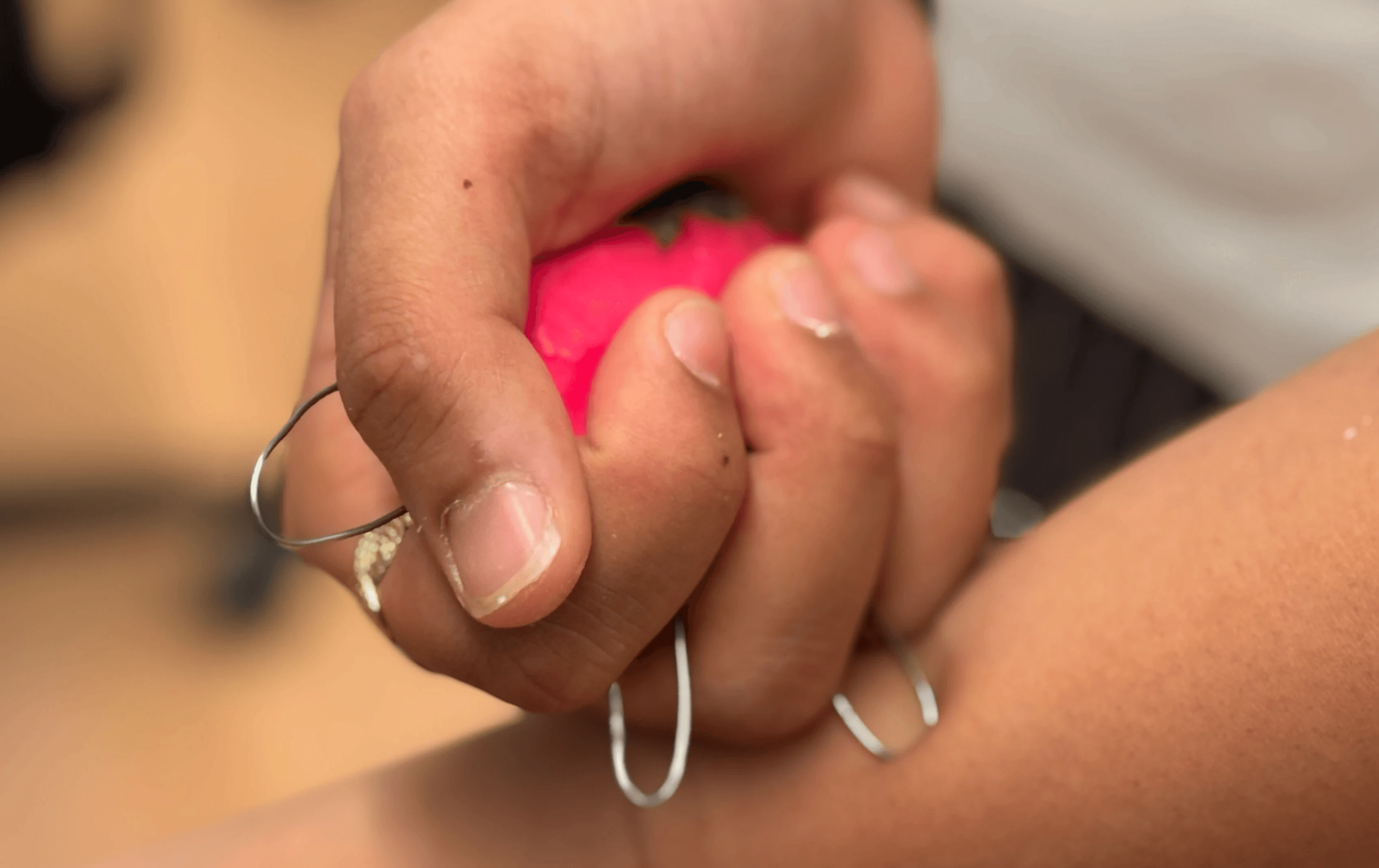
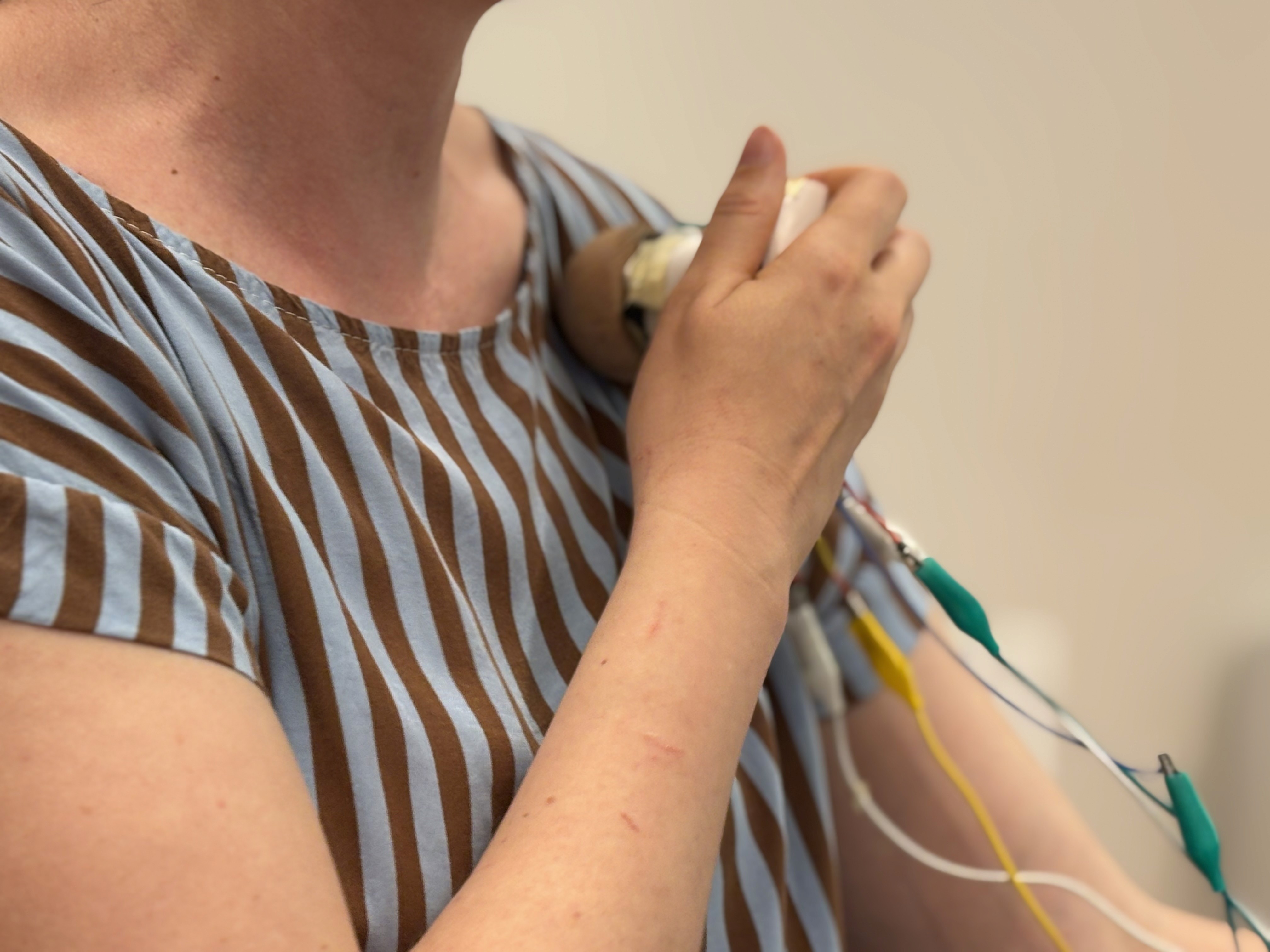
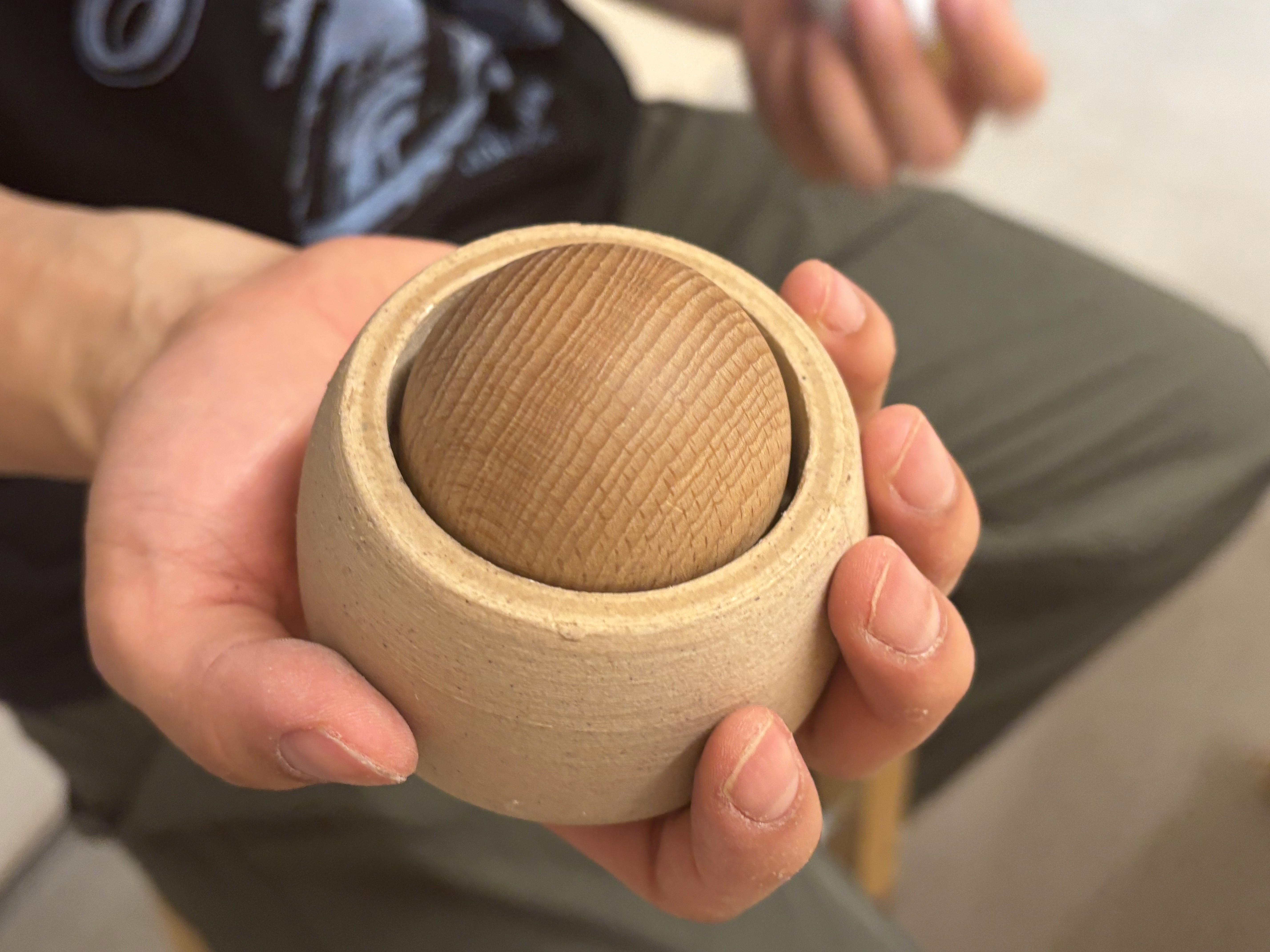
Experiments with multiple forms -- should it be hand held? should it have a smooth surface or spikes? Should it be a wearable?
Function I started experimenting with a pressure sensor + vibration or light or sound ( as feedback ). Vibration was the most in touch with the body for the users I tested with.
Experimenting with the feedback loop of the device. What kind of feedback should it give? Audio, visual or a sensation?
#4 Prototyping the output
How can I see what I feel?
To close the loop on actions performed through the device, I prototyped multiple ways of perceiving the output. I experimented with form; paintings, phone notifications, and changing tangible interfaces in the home; as well as with the nature of the output itself, using AI and processing.org.
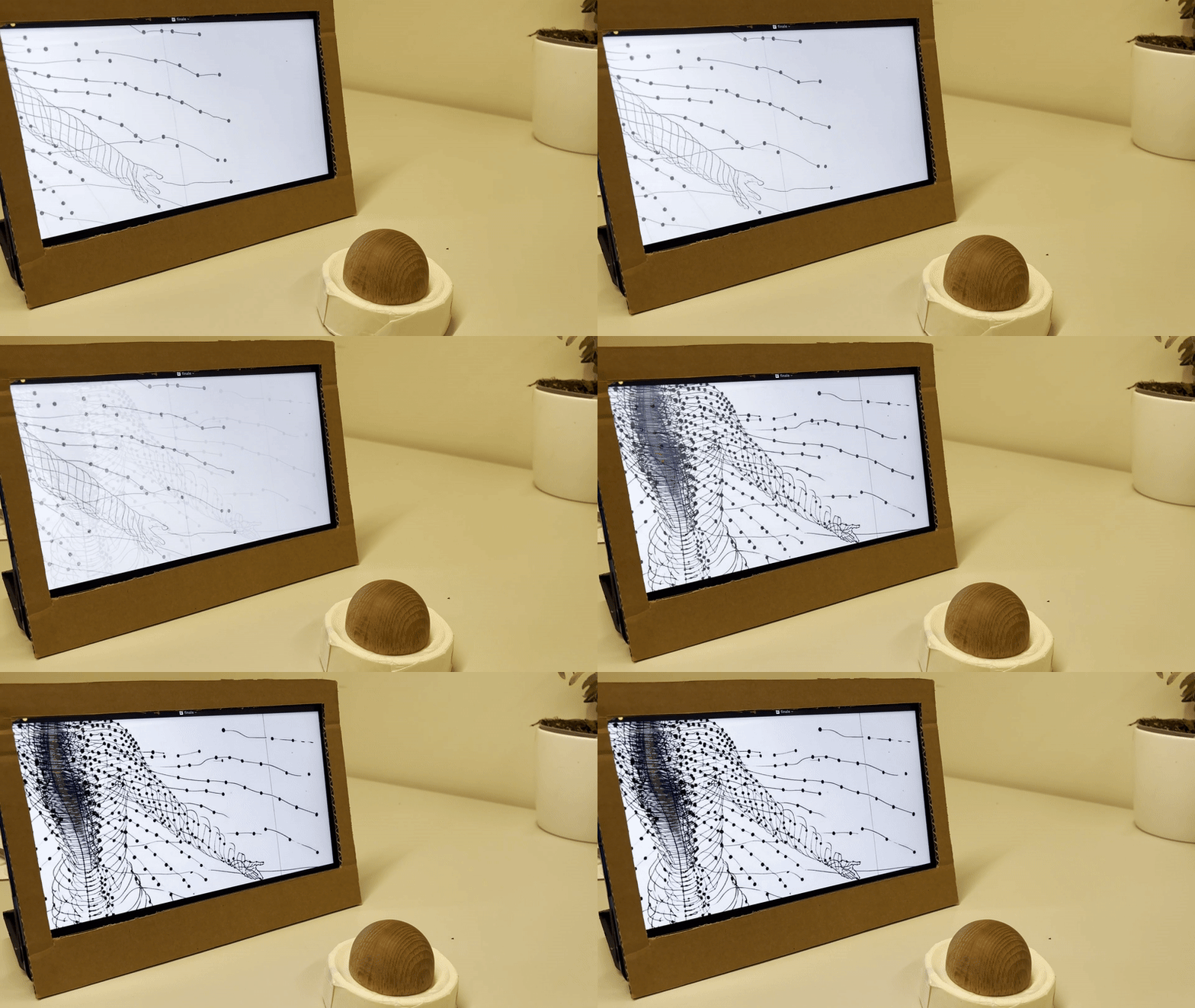
A generative painting experiment in Midjourney, with prompts based on median data and modulated by pressure sensor values.
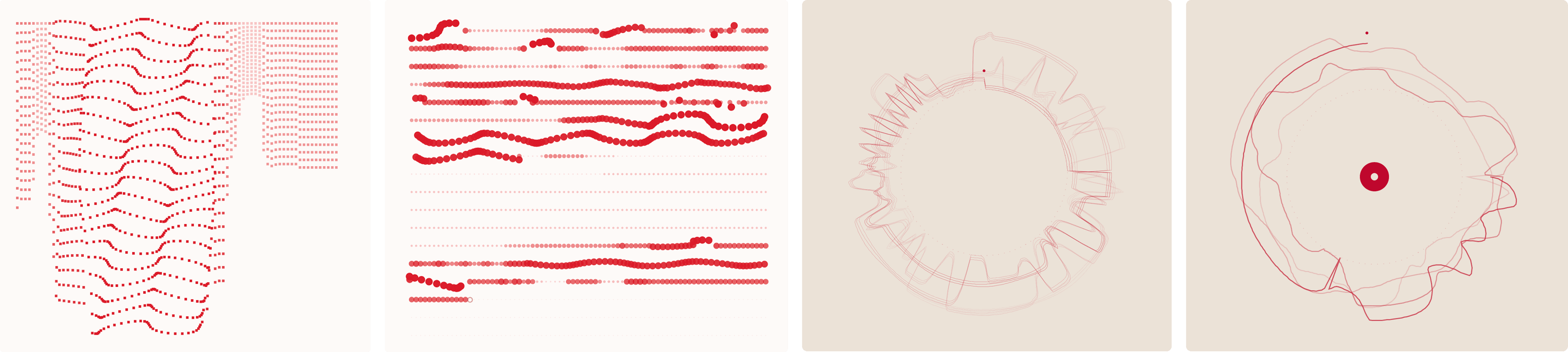
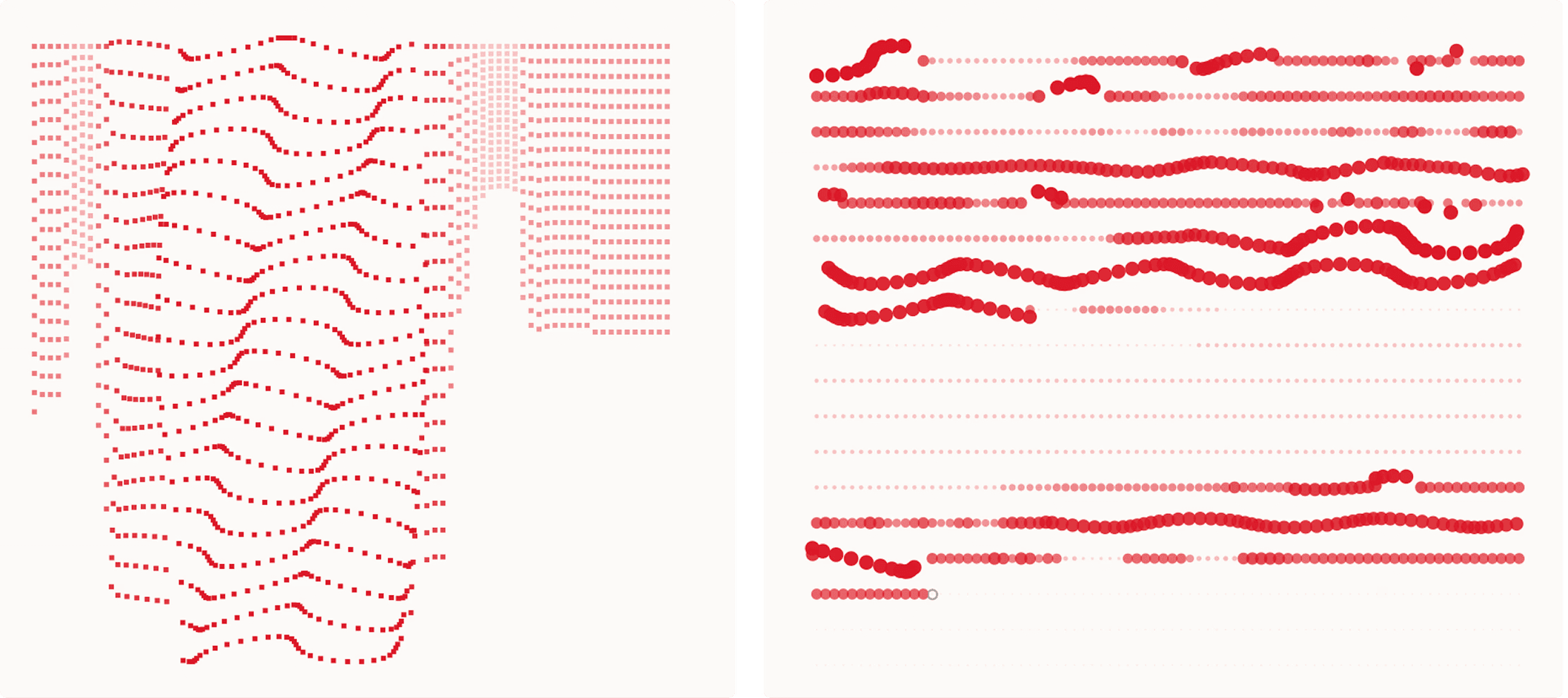
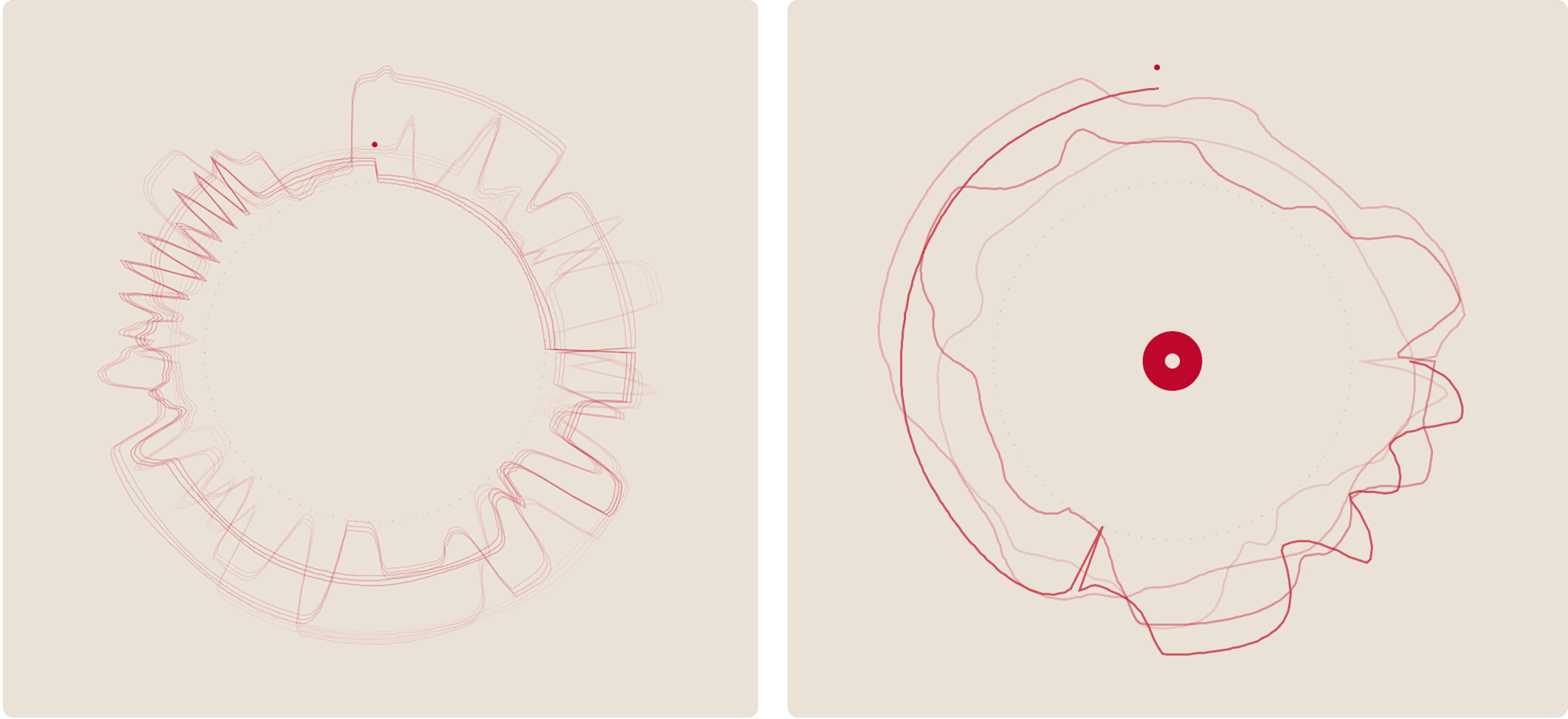
Processing experiments using pressure sensor data from an Arduino. Incorporating feedback, I shifted the visualization from linear to circular.
#4 Iterations of the final artefact
A real pain catcher that affords massaging
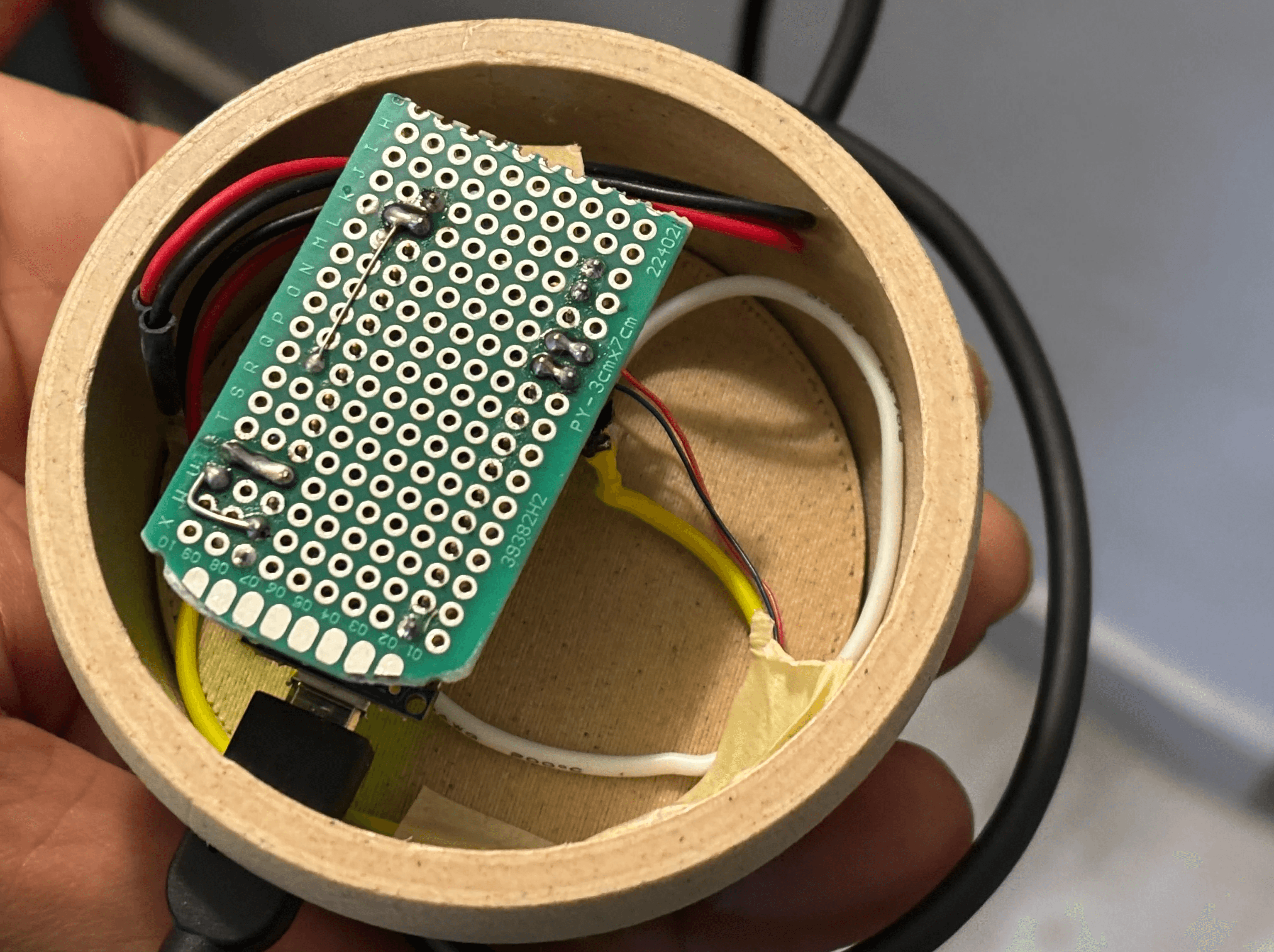
In the final week of the project, I built a working, testable prototype. I focused on the technology and on making the device as ergonomically sound as possible, while designing a 3D model capable of withstanding high pressure.
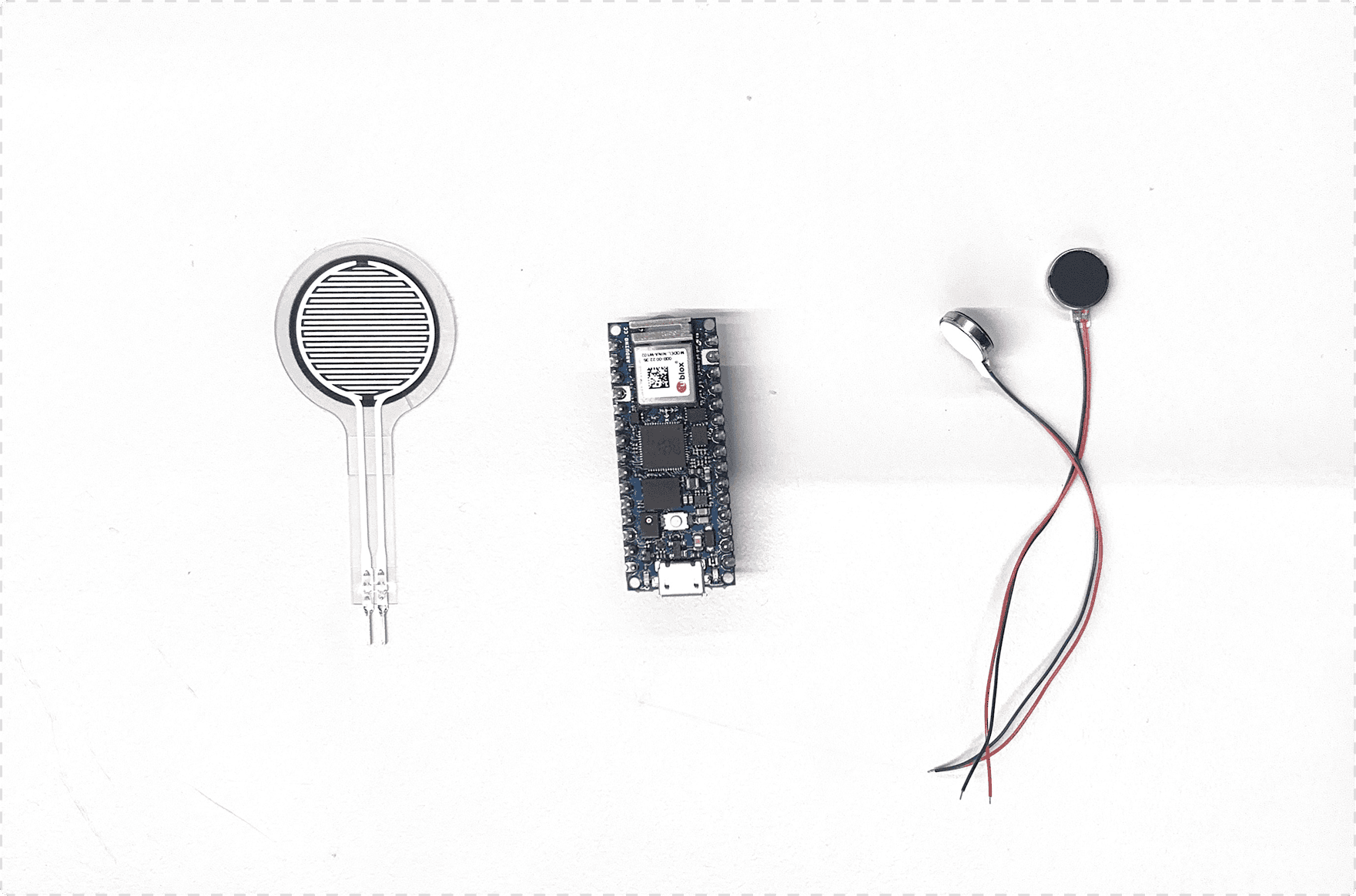
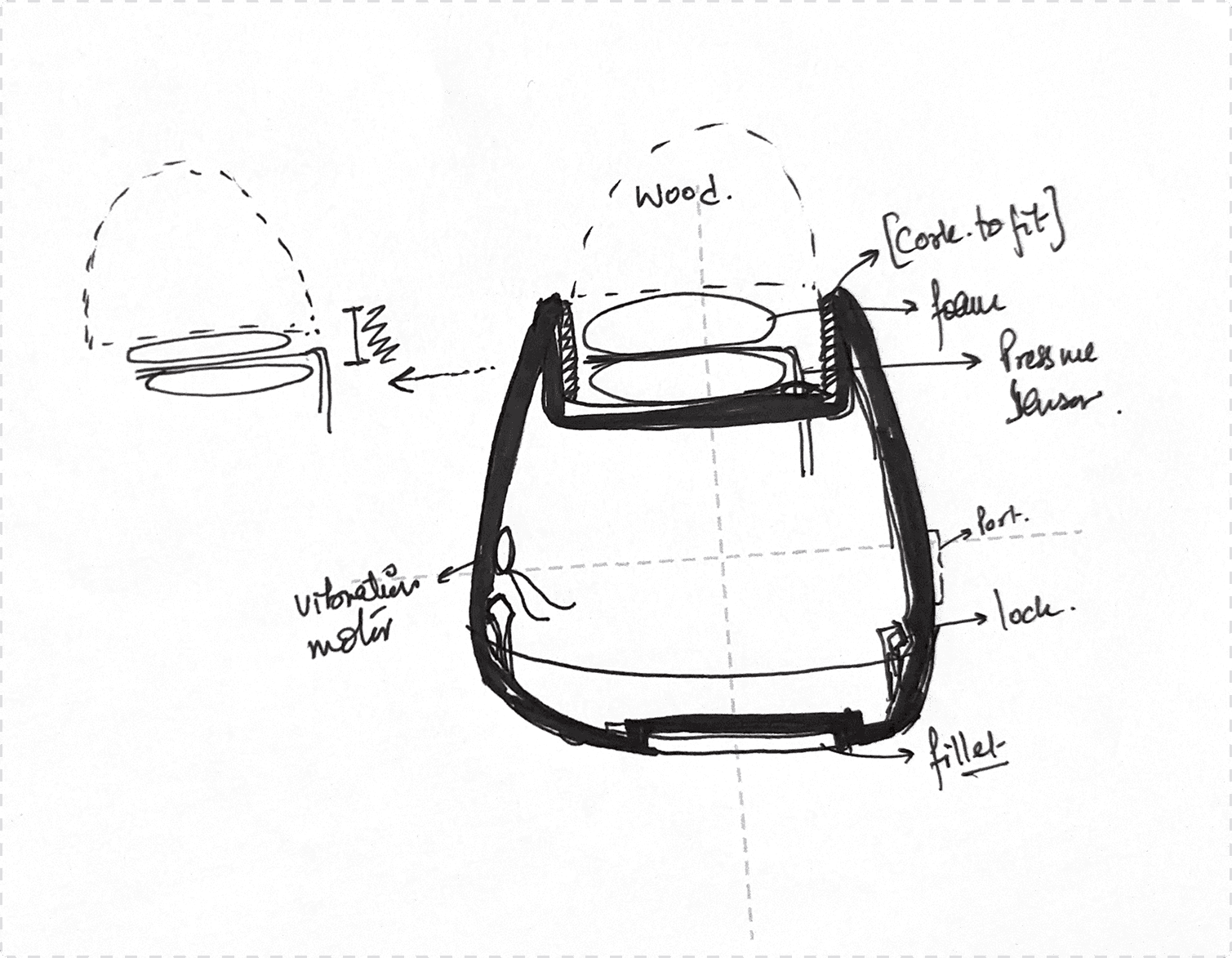
L- Pressure sensor, arduino RP2040 and 2 vibration motors R- Diagram explaining inner workings of the device
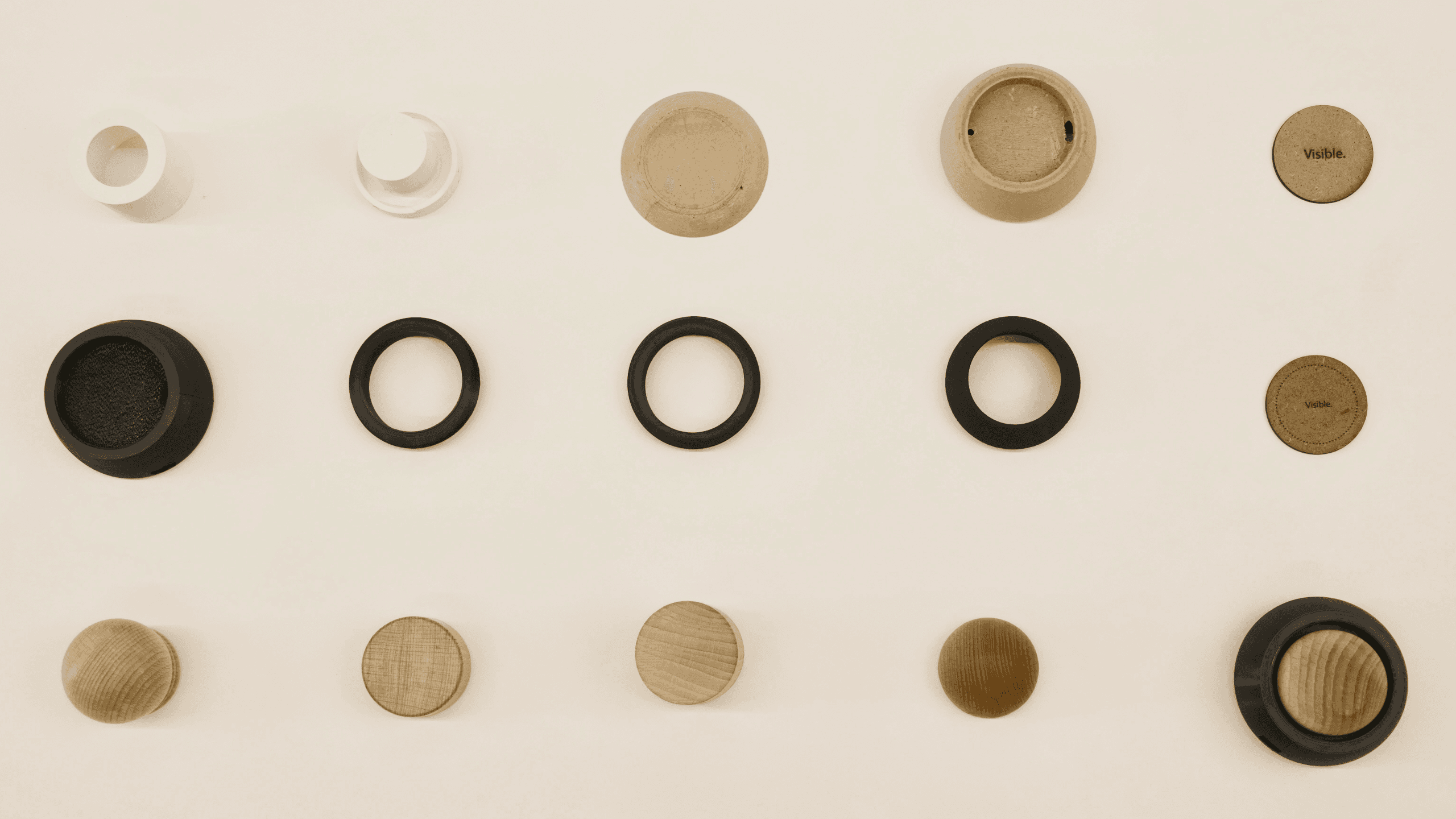
Multiple iterations strengthened the device. A wood-based filament was chosen for its smooth, organic feel, making it suitable for direct contact with the body.


What I imagine the future is
Imagine if we could feel, even briefly how another person experiences pain in their body. This project does not aim to deliver a fixed solution, but opens an ongoing questions. Questions like how intensity maps to personal thresholds, different parts of the body, and multiple chronic conditions over time.
There is no one-size-fits-all approach. This work is an attempt to design for subjectivity! Acknowledging lived, embodied experiences and exploring how systems and tools might better support the complexity and capture that chronically.